by Alena Sojková
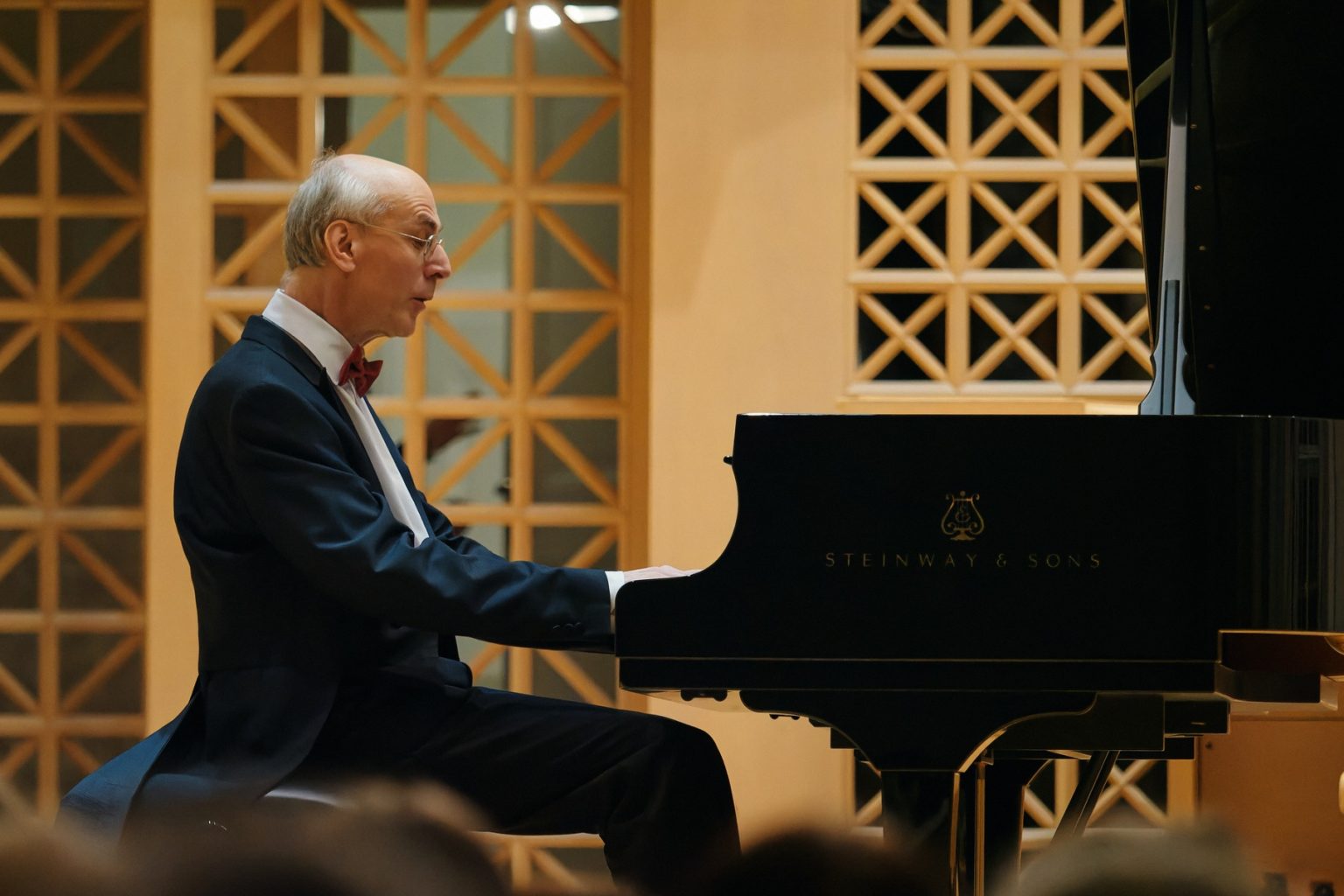
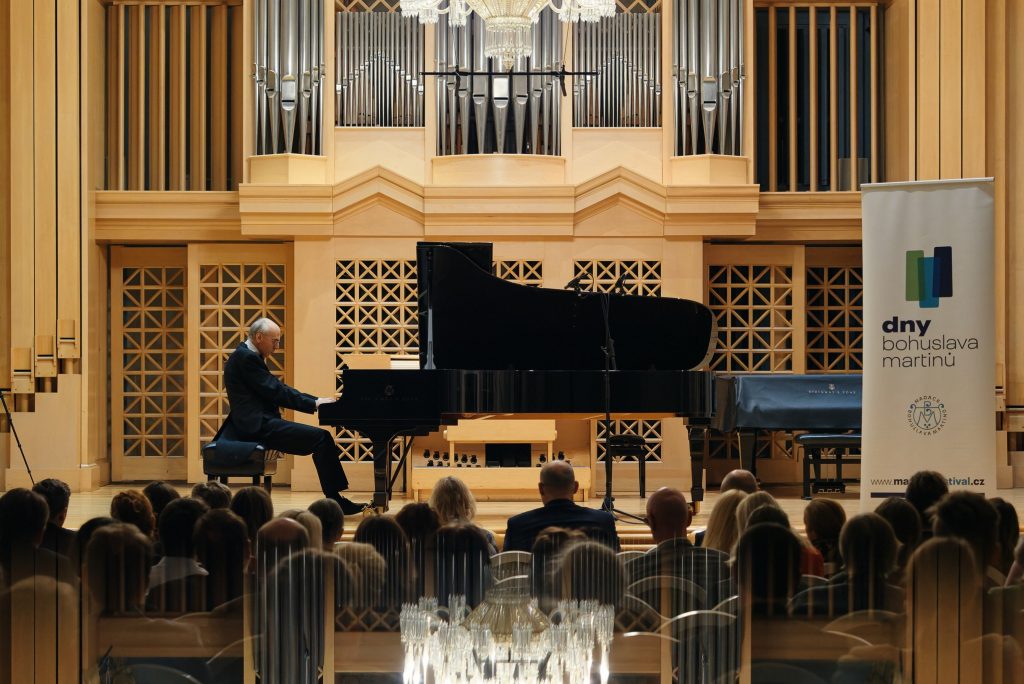
An exceptional experience awaited the audience of the Bohuslav Martinů Days Festival, when Igor Ardašev took to the stage of the Martinů Hall in the Liechtenstein Palace on Tuesday, 25 November 2025, to perform three cornerstone works of the piano repertoire: Beethoven’s “Pathétique” Sonata, Miloslav Kabeláč’s Eight Preludes, and Bohuslav Martinů’s Eight Preludes.
A Non-Pathétique Beethoven
Concerts by Igor Ardašev are extraordinary both in their programming and interpretation. His staggering technique is accompanied by a musicianship that lends precise meaning, sense, and expression to every note, together with a noble unshowiness and a modest, even restrained stage presence. His achievements at prestigious international competitions in Moscow, Brussels, Prague, Paris, and Athens are unmatched by any other Czech pianist. It is therefore no surprise that the nearly full Martinů Hall awaited with great anticipation how Ardašev would approach the works he had chosen for the evening.
I must admit that shortly before the concert I listened to Daniel Barenboim’s recording of the “Pathétique”, a version I am very fond of and that I carry, so to speak, “in my ear.” Whether or not that was wise I cannot say – but it helped me realize that every great interpreter approaches canonical repertoire with humility and respect for the score, while still allowing themselves, here and there, a slightly longer pause, a momentary slowing, firmer accents, or a hair-longer breath between phrases than the composer prescribed. Perhaps that is why it took me longer than usual to acclimate to Ardašev’s interpretation of Beethoven – an interpretation I ultimately accepted without reservation. This may in fact be a defining trait of Ardašev’s playing: it is not immediately ingratiating or easily readable; the listener must be an active partner rather than a passive recipient.
In his reading of this sonata, I heard less overt passion and fewer sharp dynamic contrasts – but all the more clearly did the movement’s architecture emerge. The pianist seemed like an architect constructing a monument from the very first bars – focused, transparent, sober. Drama was replaced by inner strength and urgency, by carefully considered gradation, emphases, and pauses imbued with meaning.
The second movement, Adagio cantabile, was especially striking: its opening felt almost cool, yet the essential content seemed to unfold below the surface, and the gravity Ardašev imparted to the movement was unmistakable. And of course his beautifully caressing pianissimo at the close. The third movement, Rondo. Allegro, he played at a very fast tempo, with a clear sonority and a highly cultivated tone that lost none of its quality even in forte. It was a true culminating pinnacle of the monument he had constructed with such unpretentiousness and deliberation.
A Fascinating Kabeláč
I believe a significant portion of the audience had come for Miloslav Kabeláč’s Eight Preludes, Op. 30, the work of a major symphonist and musical innovator. The cycle places demanding requirements on the performer; yet when taken up by the right hands – and an understanding mind – it becomes an extraordinary experience for the listener. Three recordings of the cycle have appeared in the last quarter-century: by Daniel Wiesner (2000), Ivo Kahánek (2008), and Jan Bartoš (2023), all on Supraphon. Kabeláč’s Eight Preludes are short pieces of two to four minutes, bound together by a common motif, though each prelude has its own unmistakable character and expressive world. Colouristic and dynamic layers, as well as technical demands, play crucial roles.
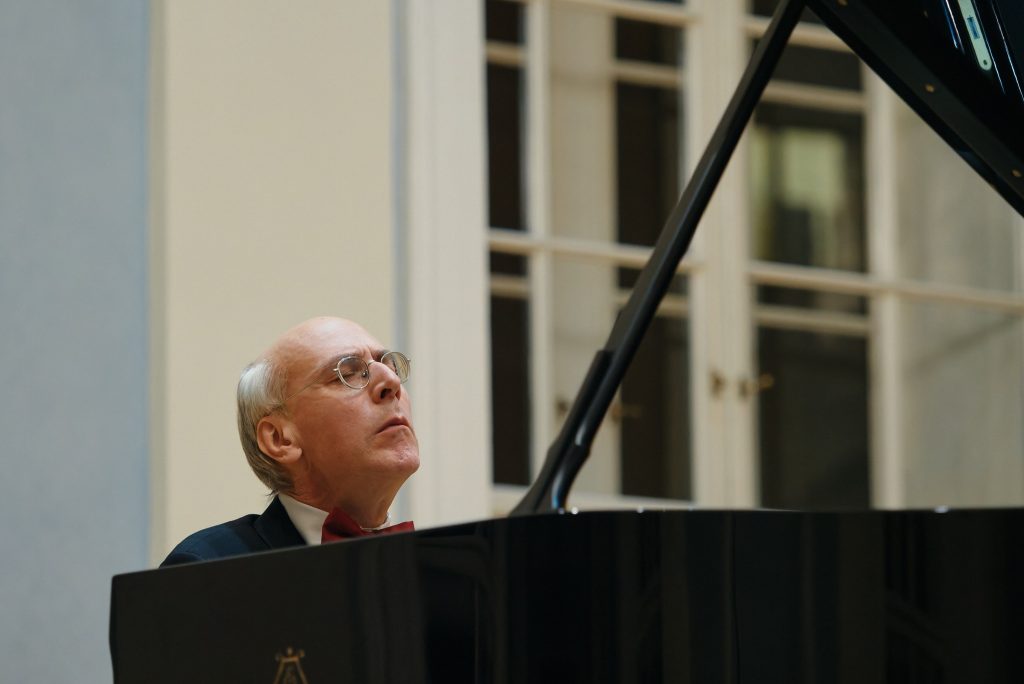
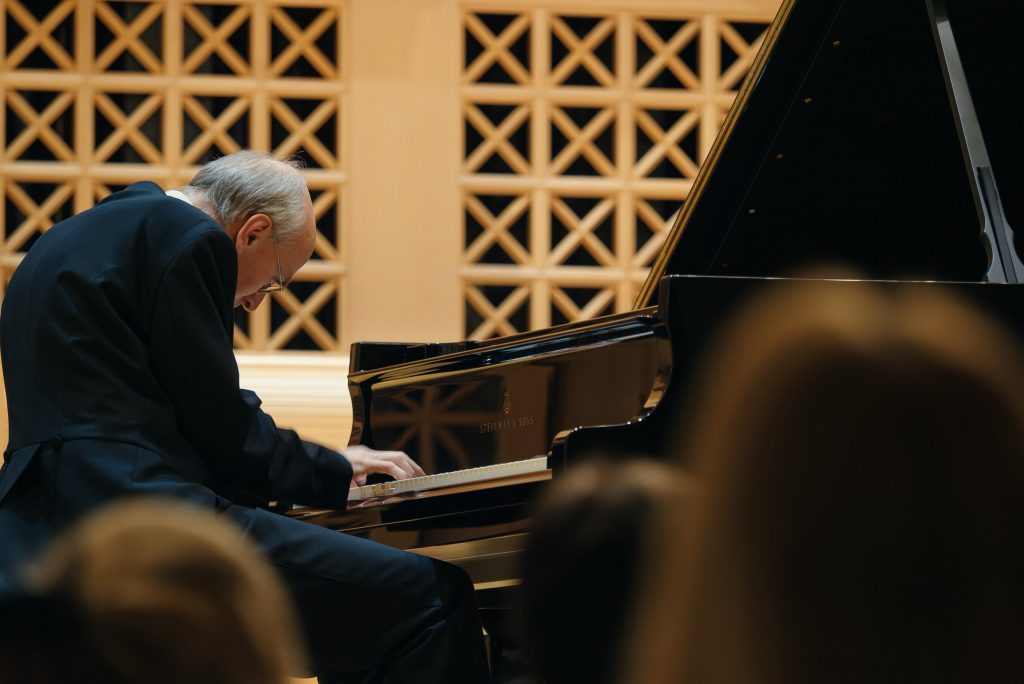
In the Martinů Hall, Igor Ardašev created a miracle. The power of Kabeláč’s music, combined with Ardašev’s musical intelligence, boundless technical command, and acute sensitivity to colour and hidden emotion, had a profound effect on the audience. The pianist played exactly as written (which, according to pianist Martin Ballý, Kabeláč insisted upon with great strictness). One could clearly observe his physical production of tone – from movements rooted in the shoulders, through sharp attacks of slender fingers on the keyboard, to the uniquely relaxed softness of sound.
Preludio ostinato was an essence of colour, created by the repeated tonal pattern in the right hand while the left conveyed the essential message. Already in this miniature Ardašev seized the listener’s attention and did not release it until the very end. Preludio meditativo he rendered with immense depth and an acute awareness of the importance of every note. The third Preludio sognante, rhythmically driven, had a powerful effect; the fourth, Preludio corale, with its clearly differentiated hands, sounded compact and dark. In the fifth, Preludio notturno, a beautifully executed trill in the right hand evoked a sense of fragility; Ardašev’s pianissimi sounded almost otherworldly, and on just a few notes he built wonderfully resonant phrases.
The sixth, Preludio volante, emerged in striking contrast due to its tempo and the excitement Ardašev infused into it; it was fascinating to observe how the right- and left-hand lines created such coherence. In the seventh, Preludio arioso, one could revel in the method of tone production – the balance of broken chords, the velvety softness in pianissimo. The final Preludio impetuoso shone like a meticulously cut gemstone.
A Refreshing Martinů
Bohuslav Martinů composed his Eight Preludes, H 181, in 1929 in France. These brief pieces – from just under two minutes (the shortest fits into one minute and twenty seconds) to nearly four – are a whirlwind of rhythmic, tempo, and dynamic changes. They are jazz-inspired, rich in syncopation, and formally diverse, ranging from blues and foxtrot to capriccio, étude, and more. In this cycle Martinů tests the sonic limits of the piano. For listeners the set is more immediately approachable than Kabeláč’s, though I am not sure it is kinder to the performer. Capturing the essence of a short piece in such a confined space and conveying the art of musical concision requires an experienced interpreter endowed with flawless technique and musicianship.
In these preludes, Igor Ardašev reminded me of an interpretative chameleon – equally at ease in jazz rhythms, carefree dance, tranquil Adagio, thunderous chords, or playful arpeggios. His staccato was machine-precise; his pressed-in tones sonically mesmerizing. With great care and forethought he shaped every tone of the Largo, while the final Étude and Foxtrot culminated in a firework of technical brilliance and electrifying syncopation.
The response to Igor Ardašev’s performance was exceptional; the audience embraced the entire programme with warmth. The pianist rewarded them with two encores, once again dazzling with his stunning technique paired with an unbelievably tender tone: The Fifth Day of the Fifth Moon by Bohuslav Martinů and the Obkročák from Bedřich Smetana’s Czech Dances.
Bohuslav Martinů Days: Igor Ardašev
25 November 2025, 7:30 p.m.
Martinů Hall, Liechtenstein Palace
Programme
Ludwig van Beethoven: Sonata No. 8 in C minor, Op. 13 “Pathétique”
Miloslav Kabeláč: Eight Preludes, Op. 30
Bohuslav Martinů: Eight Preludes, H 181
Performers
Igor Ardašev – piano