by Lucie Kocourková
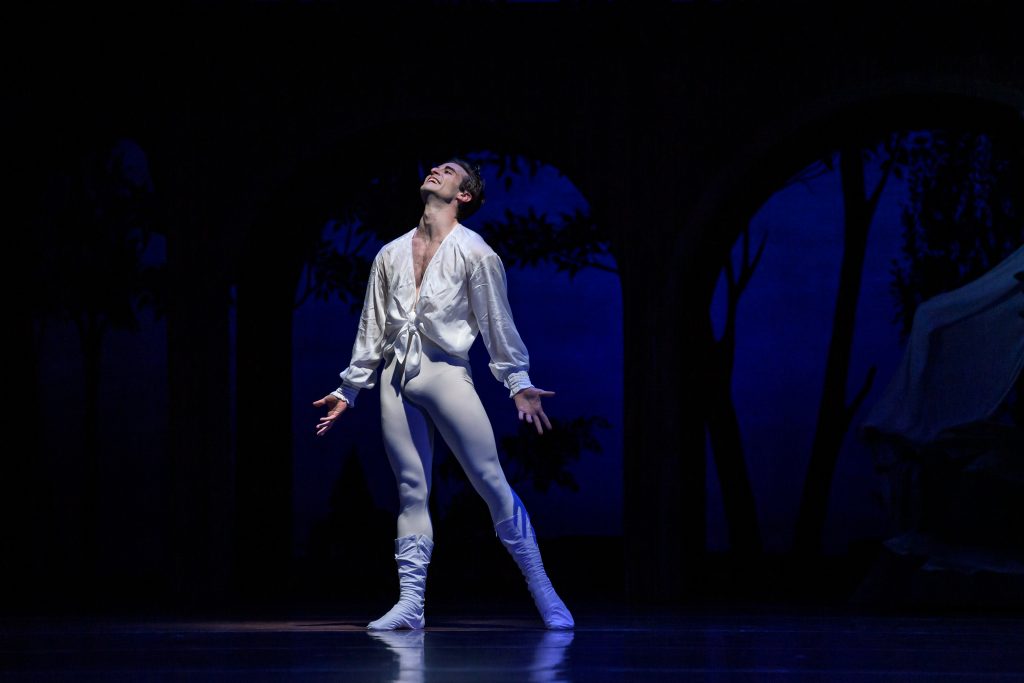
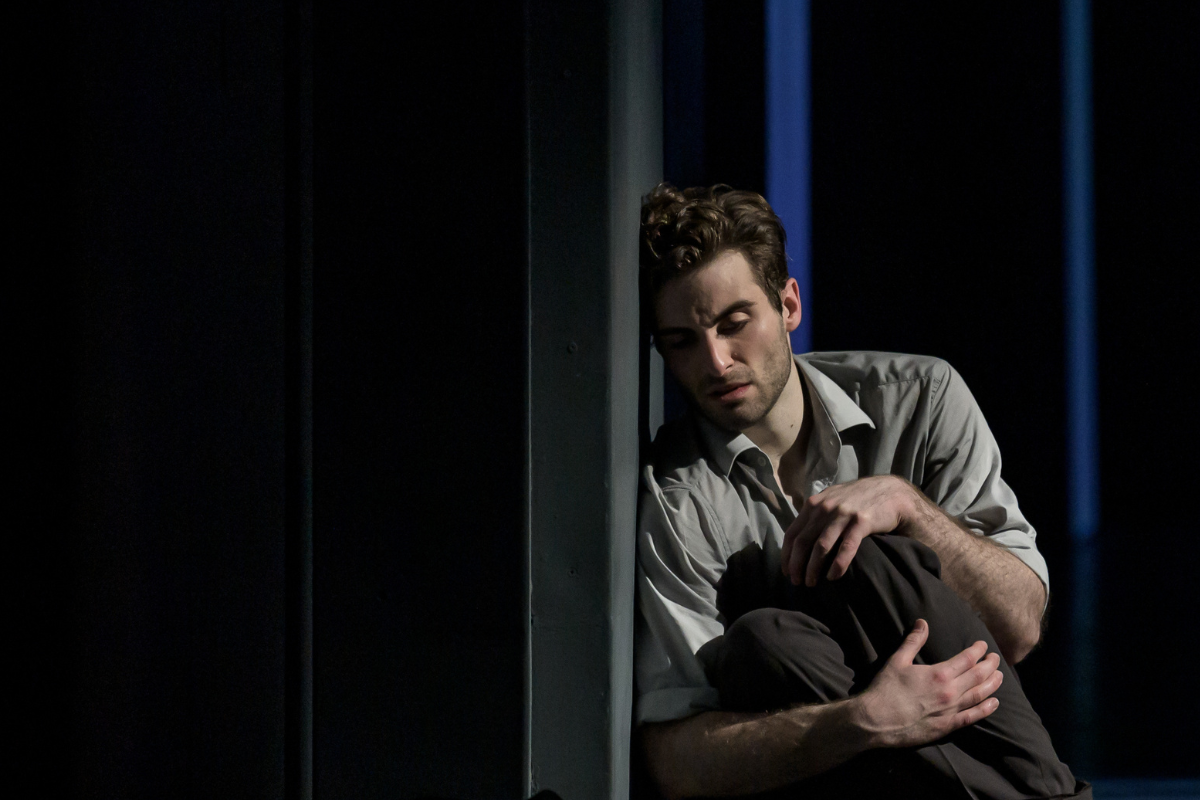
Federico Ievoli has been a member of the National Theatre Ballet for eleven years, and since 2021, he has been its principal dancer. Is it possible that we have never did an interview? In the fall, he was awarded with Thalia Award for his role as Chevalier Des Grieux in Manon, thus crossing one of the milestones that ballet artists can achieve in our country. But he is not just a chevalier or Romeo; he dances across the entire genre spectrum of the repertoire. What is behind his growing success? Endurance and hard work are the foundation, but I think that an analytical mind, attention to detail, and continuous education are also important additions. In our conversation, we didn’t even get around to discussing the upcoming premiere, in which he will of course also be dancing. Instead, we dived very deep into the details of the great ballets and the characteristics of their choreographers, into ways of (not)identifying with a role, mastering new techniques, and keeping the body in shape. And we invite you to do the same.
Let start with the Thalia Award, because being rewarded for hard work is an important point in everybody’s career. Apart from its symbolic value, did you feel that being awarded increased the demands placed on you, or did you place them on yourself, even in the context of the role?
When I got the award, I didn’t think about that so much because I know it’s related to this one role, it doesn’t mean I’m the best dancer. It’s about the character I brought on the stage. I got the award at the beginning of November, and last time I had danced Manon was in March, and reruns were awaiting me in February. At that moment, I didn’t think about how it would affect me. When we started to rehearse, I felt a bit of pressure to have everything done perfectly, especially technically. Sometime when I did a mistake in the studio, I was like, “Oh, no. I should have done it better because I got that award.” But it lasted maybe the first week of rehearsals, and then I told myself I mustn’t remind myself of it.
So, it was pressure that you made on yourself, not the others?
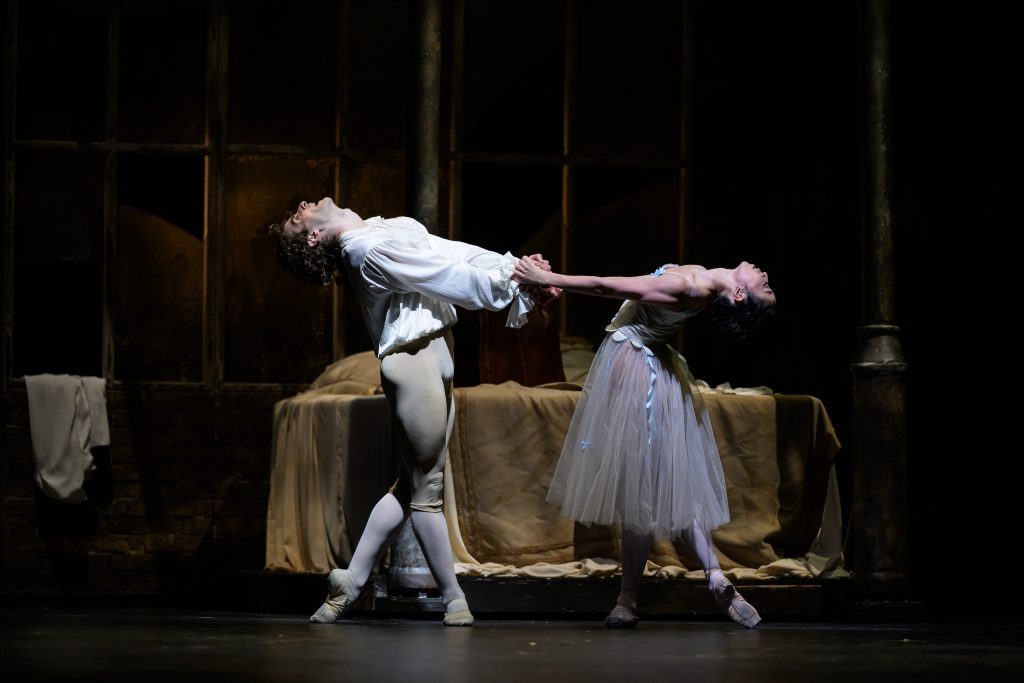
Yes, definitely. Maybe some colleague made a few jokes, but I really had the support of everybody. And regarding making mistakes during the show, the choreography is technically so hard, it’s almost impossible for something not to happen. I do not forgive myself, but I put myself 100% in the performance and I know it. If I fell from a pirouette, it’s not a tragedy. The most important thing is being fully committed in fully in the role. I now enjoy the show even more, especially after my guest appearance in Bratislava last June when I experienced the role with another company, another partner and ballet master. I think it really enriched this character. When I enter the stage with my book, I sit on the bench, and there is this beautiful music when Manon enters the stage -– it’s one of the cathartic moments. It doesn’t happen so often to me because I think a lot when I dance, but this is one of the moments I just stop. I feel really transported in another world.
When you say that you “think a lot” during dancing, does it mean you think about the technique and how to do this or that perfectly or some inner voice connected to the person you’re portraying?
It depends. If it’s a storytelling ballet, it’s more about, as you said, inner conversation. I speak in Italian a lot to myself and my colleagues in my mind. If it’s more technical role, I might think about some corrections, some little reminders to myself how to control muscle memory and such things.
That means thinking about feelings of the body? I can imagine the thought is actually embodied.
Sometimes it’s more about the feeling then words, especially before hard technical elements. If it’s a technically demanding ballet like Sleeping Beauty – for example, the third act pas de deux – the body actually goes with the flow. You listen to the music, and you don’t think about choreography because you have it in your body 100% with you, and your brain guides your muscle and your limbs to what you have to do to have it correct.
Identification with and detachment from the character
It might sound trivial, but – do you really like Des Grieux? Would you befriend him if he was an actual person?
I actually think he’s a bit annoying. (laughs) But I admire that he doesn’t give up. He refuses to accept that Manon might not love him so unconditionally, she might give up on him for money, for material goods like dresses, jewellery, and so on, but I admire him. For me, even if I love someone, at some point, if this person doesn’t give me back what I give, I’m like “Bye bye”. Even if this means to suffer. Des Grieux’s character is part of the drama. It might not be the reason for everything that happens in the story, but if he was a bit more on the ground and understood Manon, maybe the killing, the escaping, the jail, the deporting wouldn’t happen. I quite like him, but I think in second act it’s a bit too much, especially when it comes to certain extent of aggression. He’s not violent, but more physical towards her and others. It’s not what I like, though I understand his frustration. It’s beautiful in a way that he is so driven by the feeling of love. It’s nice to be like that but you also have to be careful, because you can do something you will regret…
In this sense, the ballet can be quite inspirational, even though it takes place in a different era. One thing that interests me always about the dancers studying the role is how they prepare. So how you prepare in these situations when the ballet is based on a novel or drama? Do you read it, do you do some research?
Well, regarding Manon, I have to admit I didn’t read the book. Guilty! (laughs) I’m not a very reader. But I did my research. I read about Abbé Prevost and the book and how it was written. I saw the ballet many times in my life, first time probably in Teatro alla Scala when I was at the school, or even before. I watched many videos and also the documentary about Kanneth MacMillan and his work. The guidance of Robert Tewsley, who staged the ballet in Prague, was so important. I watch videos, listen to interviews, I take something, but not everything. I just say, “Oh, maybe this could work for me as well.” It’s complicated because I don’t want to copy someone.
I think this is very important because sometimes understand the time period and the society of the day is also crucial for understanding the plot. It tells a lot about the intentions of the characters and why they seem to act weirdly or unethical.
I remember one moment when it was really necessary to know the historical context in order to understand what was happening. It was when Robert was working on the scene of card game at the end of the second act where I, as Des Grieux, cheat. When he said it the first time, it kind of “clicked” and I understood. He explained us that cheating at cards was the worst thing you could do at the time, it was a more reprehensible act than killing someone. If you cheated at cards, people would look at you as the worst person in the world. This explains a lot about why certain things happen afterwards and why the conflict is so huge.
How much do you really get “inside” the character?
I always try to put myself “in” it, but it is still me. In the past, I tried to be someone else you hear it so often both from dancers or actors: “Oh, I want to be someone else on the stage. I enjoy being someone I’m not.” I thought it was the right approach. But it didn’t work, I felt I was forcing myself. So, I always try to put myself in the role, I think about how I, Federico, would react to some situation. I’m not trying to get all the information to be someone I’m not. Of course, you need to understand the historical context and the choreography, but on the stage, I don’t think like Des Grieux. I know I’m acting, but I want to be myself.
I think I can sense the difference: you don’t immerse yourself deeply in the role but rather let yourself be carried away by the production. Metaphorically speaking.
I also need to have contact with people around in order to be fully committed on the stage.
I don’t know – isn’t it more distracting?
I know dancers, who need more concentration or immersion into the role, but for me, I need to be there and watch the others, talk to someone backstage, in order to feel like I’m a part of the show. Otherwise, I may start to drift away and think about things not related to the performance. As Mr. Kylián always said: “This is now. This is the time present. This is the moment.” Also, when I am fully present, I cannot think about being stressed or anxious or nervous at the same time.
Do you ever get stage fright?
Of course, you are a bit nervous before the show starts, but it can take you away from the role, from delivering the performance. As I said, even if you do some mistake, if you are 100% committed and truthful, you know you did the best you could and brought as much beauty as possible. That’s the purpose of this job. Not doing just everything perfect. Of course, technique is necessary, if you want to be on the highest level and keep it, but more important is to be truthful because audience will react and understand.
I guess, most audiences don’t care about number of pirouettes and extent of turnout, they come for emotions and feelings. It’s the dancers who sometimes suffer from obsession with perfection.
Spot on, obsession with perfection. Especially nowadays with the access to social media (and I admit I’m also part of it). You constantly see perfection. You scroll, and you see people doing amazing things “I wish I could do”. And you’re just bombed every day with thousands of videos of amazing dancers who do amazing things. But this is just the tip of the iceberg, you don’t know how the dancer manages the whole show, how does it look when he has a bad day. It’s not fake, but we always show the best moment only. I also don’t want it to sound like I don’t care about mistakes on stage at all. When I make a mistake, I also get upset and I do care. I go to the studio and try to figure out, why this happened. Social media are great in a way. When I grew up, there was not such a thing. Now I really know about many other amazing dancers, repertoire and companies, dancers sharing their experiences, which is inspirational. But it can also be a bit destructive. We sometimes don’t realize that these amazing dancers make mistakes too.
Enchanted by music
Do you also travel to see live performances abroad?
Last two years I was around Europe quite a lot. I wanted to travel more and watch more live performances. It was still some urge after the Covid period when we only watched videos. We really missed live performances, and it took a long time to get our fill. Inspiration from live performances is so important. Many things can go wrong, but this is the beauty, how spontaneous is a show. It’s interesting to watch how dancers solve difficult situations and still steal the scene and the show. I went to Paris Opera, San Carlo, my hometown Napoli, Rome, Berlin, many places. I also went to Slovakia to watch Manon before my guest appearance. I’ve been to Vienna, listening to the Mahler symphony with Wiener Philharmonic… I felt so lucky. In Paris Opera I went to the opening night of Sleeping Beauty. There are still some places I would like to visit. I want to see New York City Ballet, that’s a little dream of mine, to see some works of Balanchine or Robbins. I really like Balanchine’s musicality. And musicality is one of the best qualities I could find in a dancer, apart from technique. It just catches my attention so much. It’s the way someone listens to the music and phrases the movement and the different dynamics.
You got your love of music from your family, right? Your brother is a musician.
Funny thing is I don’t like to listen to the music at home at all, but I really enjoy going to operas and concerts. I’ve been to Cavalleria rusticana last month. I haven’t watched this opera for so many years, maybe the last time was still in Italy. And when I got home, I couldn’t stop singing. I put some music on my phone, which is something I almost never do, and listened to Mascagni, Leoncavallo… I think opera is more powerful than ballet for me, as an audience experience. Perhaps because ballet is my profession and I am a layman when it comes to opera. Maybe it’s the drama, the voice, some librettos are really great. I feel ballet is sometimes less interesting, regarding the story, not the choreography.
I understand, how you mean it. Historically, there were periods when the libretto was less important; what mattered was creating spectacular choreography for the prima ballerina or creating space for what we would today call a show. Ballets-féeries also brought their own genre into crisis. By the way, who is your favourite opera composer? And how do you feel about choreographers using opera music in ballets?
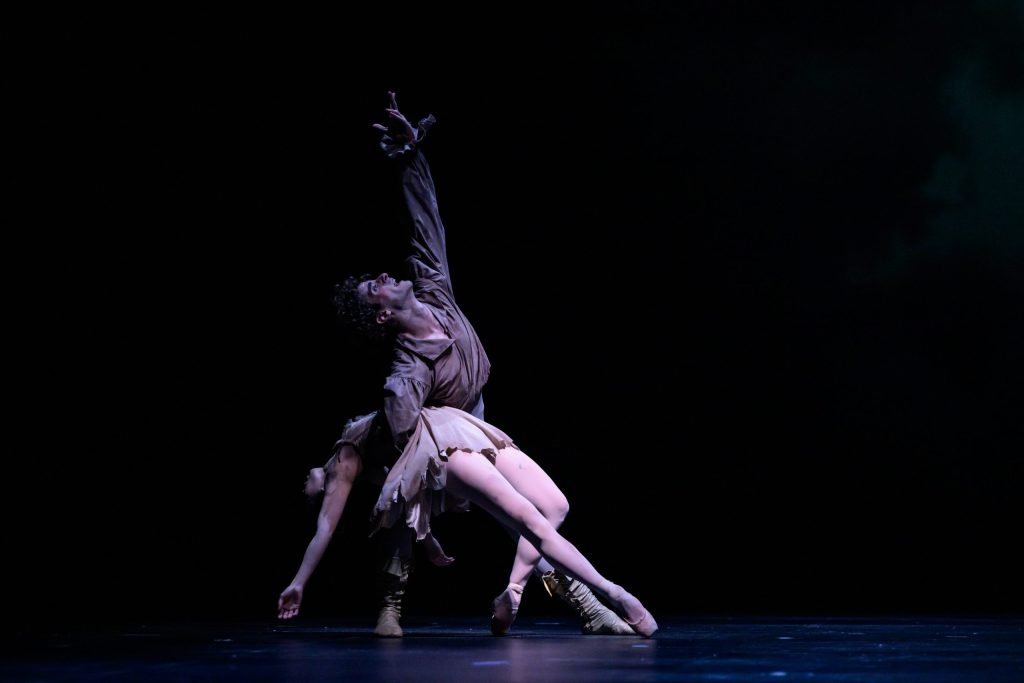
Puccini is one of my favourites. La Bohème, Madama Butterfly, I don’t even know how many times I’ve seen them. Music for ballet derived from other genres can work great. For example, Manon is very interesting. It is Massenet, but even though he wrote the opera Manon, music from his other operas were used in the ballet. A new orchestration was created, but you will recognize the main themes of his works. The last part is from oratorio La Vierge about the life of Virgin Mary. It is used as the very last piece of music, to accompany the famous “swamp pas de deux” when Manon is dying. Musically, it’s actually the moment where the Virgin Mary is dying too, but she’s relieved and happy because she’s going to be reunited with her Son, the aria is Rêve infini, divine extase. Before the premiere, I played some music from the original score of the ballet, especially the end, and I realized how musically connected this part is to the ballet libretto, how well thought out the selection is. Manon is dying in the arms of the man she loved and the only man who ever loved her with all his heart…
However, Manon is not destined for ascension, so she does not have much to look forward to. Nevertheless, it is true that knowing these details completely changes one’s perspective when viewing the ballet.
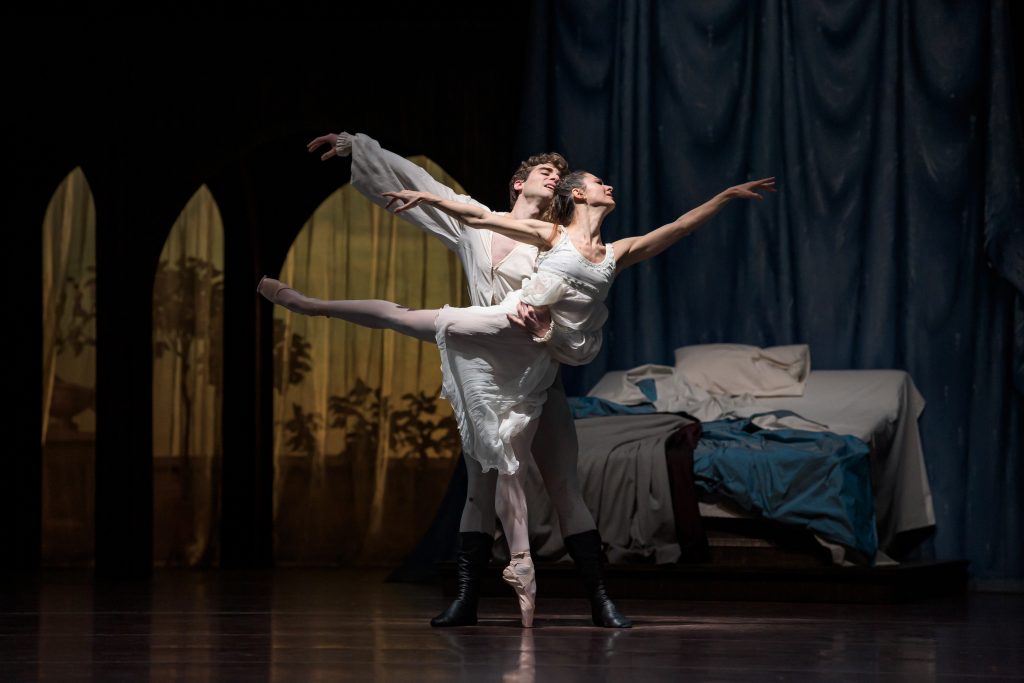
Finding this connection also helped me to develop the character more. MacMillan’s choreography is extremely sophisticated, truly clever. There is this “Manon step” that she repeats three times in every act. As a character, she changes a lot. In the first act, she’s a bit naive, more of a dreamer, in the second act more seductive and then the third act leads towards death. And the same movement, the way she flips in the arm of the partner, always appears. In the first act, it’s during the bedroom pas de deux, and she just does it out of happiness and joy of the moment. In the second act, she flips from man to man, into the arms of him, who has power, money, wealth. And the third act, she just runs to me, and she does this double flip, broken, tired.
When I danced Manon for the first time, I was a bit overwhelmed by the difficulties of this choreography. I had that feeling “Oh, no, this is too hard. Why? Why does it have to be so? Why do I have to do all these pirouettes, why can’t it be one less, one element?” But it’s these small details that made me think that it’s not just for the sake of technique or challenging the dancer. Everything has some meaning, almost every step he created. It’s very impressive. But it doesn’t happen so often for me to have such a connection with the choreography.
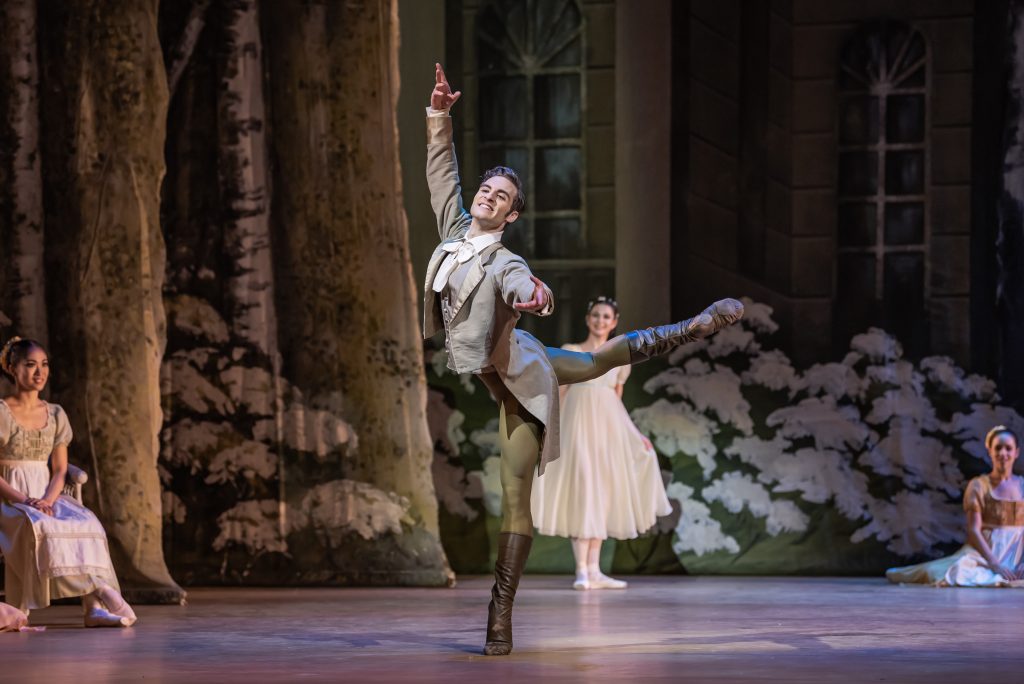
Many facets of the neoclassical dance
You just played into my hands. In Prague, we have ballets by the three greatest storytellers of the 20th century in our repertoire: Cranko, Neumeier, and MacMillan. Perhaps MacMillan and Cranko are closer in terms of structure of the ballets. With your highly developed sense of detail, how would you characterize what is typical for them in choreography, how would we always distinguish between them?
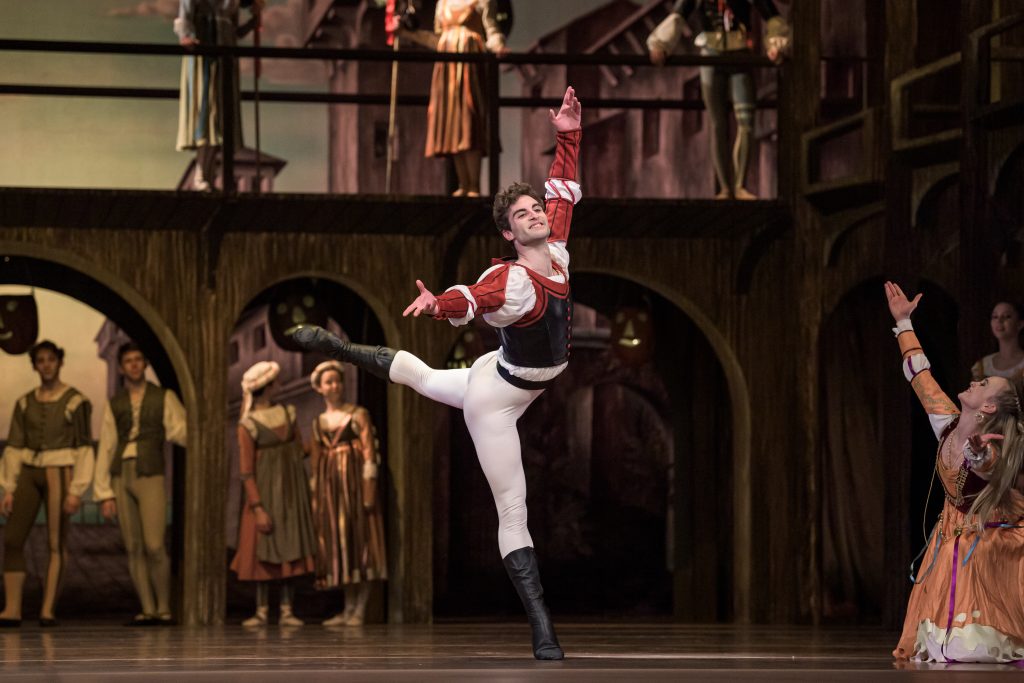
For example, one of the first differences I found between MacMillan and Cranko is the position in which the dancer is placed (spatially) in relation to the audience. In Cranko’s ballets, when we “talk” to somebody on the stage, we are always slightly turned towards the auditorium. So the audience could understand what I am saying to this person, even with the movement, with the face, which is very clever because the audience really understands everything from it. And also the fact that everything in the part or in the solo is repeated twice. Second time you have to do the combination with a different quality, so you see the same step repeated twice, but the feeling is different: for example, the first time it’s a bit more introverted, the second time more risky, or the first time it’s more joyful and then the mood changes. It’s also very clever because it gives the audience the time to understand the choreography, the meaning, the emotion and so on. If you focus on it, you will see that this principle appears in Romeo and Juliet as well as in Onegin.
And McMillan has exactly the opposite. As a dancer, you almost never see the audience, you just look at your partner, which also is very interesting because from the perspective of the audience it’s almost like watching a movie. In a movie, you usually don’t have actors looking at the camera, you just have actors looking at each other. And in MacMillan ballets, so many things happen at the same time, everyone has a different movement, a different action, it really resembles film directing. Maybe Cranko works with movement material in a more stylized way, while MacMillan in a more civil way. But still, you can just stand and walk as you would in real life in Cranko’s ballets. You don’t have to make huge gestures, just do it as you would do, just emphasized a little bit. It’s about finding balance. I can’t act like I’m shopping in the supermarket, but I’m not a prince either. I don’t know if the audience can spot these differences, but it’s enriching for the dancer to experience both.
It fulfils the meaning of the term neoclassical: still classical technique, but more natural in behaviour.
Yes, it’s about finding the way how to look natural, but you still need to keep a certain style. But I think, it can apply to some classical ballets as well, especially nowadays. I think it’s nice to see someone entering the stage with a grace of prince and very elegant, but also natural, humble. Then I feel more connected to the character as a spectator. Maybe it’s just my personal taste. But I can say I’m hearing lots of other dancers’ experiences, sharing the same thought. Especially after some years that you’ve danced storytelling ballets, you change the approach even with the classical repertory.
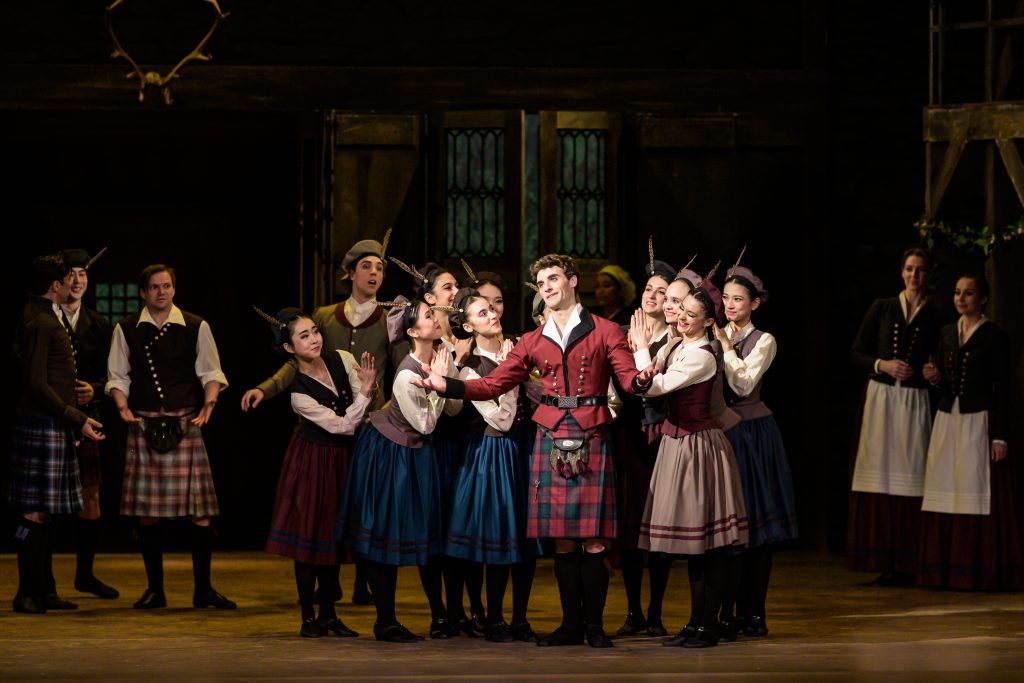
Into the secrets of dance techniques
It’s very interesting to see that how the career develops, you change your way of dancing and acting. But we do not only have the classical and neoclassical storytelling ballets. You also have to deal with abstraction, modern techniques, sometimes pieces on the borderline between modern and contemporary (if we agree on the premise that contemporary dance is an outgrowth of postmodernism).
I see. It’shard to differentiate, because dance is evolving constantly. My first love was classical ballet. But of course, with the age and experience, I encountered many – let’s call them contemporary for the moment – choreographies. It also helped me so much with dancing in classical ballet, to understand how to free myself movement-wise and in approaching the stage. It’s a bit hard to explain. I think it’s because I dance so many contemporary ballets that now I’m freer in the classical repertory as well. It’s good for me to change the register. I feel when I get stuck on one thing too much, I start to overthink and get in tension. When I rehearse a ballet and then in the afternoon switch to contemporary, it sets me free and helps me to not think about that rehearsal and the mistakes anymore. It helps me to bring another part of me.
I think you’re one of the few who appreciates the fast switching between styles. It must be hard to get rid of the classical memory of the body and be really contemporary. The technique is so embodied as a physical part that you just cannot switch it off, I guess.
Well, of course, when choreographers come here with some really special style, they see we are very ballet-based and ballet-trained, they must guide dancers toward the correct principles of movement they bring. And as a dancer, you have to be clever to change the register, but still, everything we do is based on some technique. We are not doing crazy floor work for an hour, conceptual pieces. But it requires some adjustment to dive into different techniques. We also did some storytelling contemporary ballets, such as Mauro Bigonzetti’s Kafka: The Process. It is very interesting to have a storytelling ballet with a contemporary vocabulary; it’s a new layer on my language. I also enjoy choreographies that have no storyline, but it’s usually not 100% “no story”. For example, Jiří Kylián’s, even if there is no real story, you have some hints, thoughts, you can make your own world and your own special moments on the stage with your partner and the audience. For me, the connection with music is also crucial.
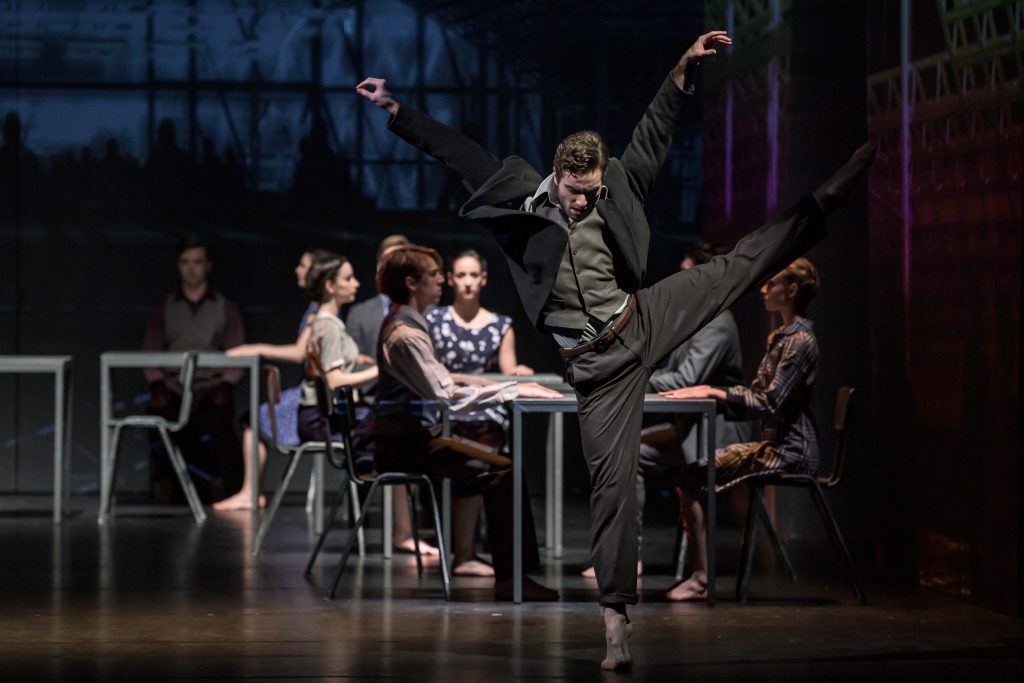
And what if you don’t like the music or if it’s uncomfortable? Silence, noise?
It doesn’t happen so much. But we have some more difficult pieces. It may seem that music and movement are not connected, but there is always some meaning in it. I may not like the music but it’s my job, I do what the choreographer tells me, and I try to do 100%. I try to pick the best from every experience, from every ballet, every creation, every choreography we have. You can learn a lot dancing something you don’t feel comfortable in or you think you don’t like. You have the opportunity to go on the stage to present some work, and that’s always valuable.
Did it ever happen to you that you had to portray some character you really hated or disagreed with? Or does that not happen to you precisely because, as you said, you always remain true to yourself?
Sometimes I struggle a bit with really dramatic characters and with funny characters as well. Humour is something really hard to present on the stage, to make it really fun. These types of characters usually don’t evolve during the ballet and maybe this is the worst for me. They are a bit flatter, and you have to keep the personality same in every entrance. I wouldn’t say it is boring; it’s something that actually needs a lot of effort to keep the performance at the same level. Changing the register makes the thing easy because you’re transferring to the other mindset.
I was also interested in your earlier studies in Italy. Regarding schools and techniques, were you all brought up on Vaganova-Tarasov system, or are there still some schools based on Cecchetti?
No, I don’t think there are any. I started to study in the San Carlo Ballet School, but I left. They wanted to kick me out because I was not fit enough for a nine-year-old boy. (laughs) I went to a private school and then to La Scala, where I had a Russian teacher. The director, Federico Olivieri, is French, I feel La Scala has its own method, a mixture of Russian and French training. I think nowadays, having experience with just one type of training is not enough anyway, if you want to dance in a major company in Europe. You definitely have to adapt a little when you’re going to join a distinctive company, learn more of the Balanchine style if you want to join the New York City Ballet, the French school for the Paris Opera, the English style, if you want to join Royal Ballet. In Italy, San Carlo Ballet School, Roma Dance Academy and La Scala are the three major schools in the country. I think they have their own methods in a way, because for example in Rome, they had Cuban teachers, it’s usually a mixture. I had a teacher from Bolshoi, so we had Vaganova, but it was not some crazy Russian style of teaching, it was strict, but open to other influences. From my perspective, the strong Russian training is really helpful, especially for the first classes, from 10 to 13-year-olds. But then it’s very important to pick everything good from the other styles.
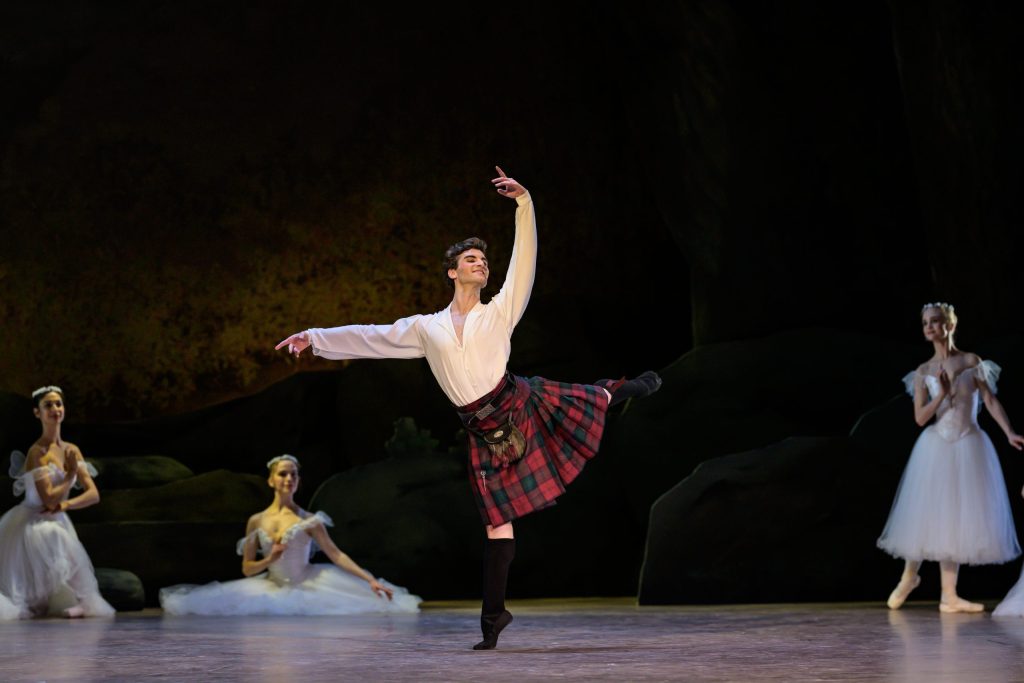
When did you first encounter modern techniques?
In the La Scala ballet school, but I have to admit I did not like it. Maybe because I was 14 or 15 with the first experience in contemporary and it was too late. I kind of pushed it away and thought I was not made for this; it was not my “area”. When I joined the theatre here, I started to understand what’s modern and contemporary dance simply by learning and dancing the pieces, listening to the choreographers and assistants. Maybe it took a bit more time, but I think the fact that I was thrown on the stage helped me understand. I put a lot of effort in it, because I wanted to be good and to show I could do this as well. There were many choreographers, I wanted to dance as much as possible. I forgot about the former classes and dived in it. But it’s a personal experience.
You only have one body
I also know you decided to study at the university. What are you studying? Are you already in your master’s program?
Actually, on Thursday, I have my dissertation defence. (Before our interview was published, Federico defended his thesis, so we can congratulate him, editor’s note.) Master’s degree in sport management. I did kinesiology and movement science for the bachelor.
Wow. You’re planning a second career or?
It felt like finding something I could learn distantly. Unfortunately, in Italy, I cannot study any subject at a ballet academy distantly. There’s just one university, Accademia Nazionale di Danza in Roma and they don’t do online tuition.
Wouldn’t you like to try studying a degree course here in English, if it was possible?
I just thought to myself: “I’m going to start to study something. Let’s do it in Italian first because I’m confident with the language. And if I have to write something, I don’t have the language barrier.” I felt just comfortable. I took it very easily at the beginning: “Let’s see where I’m going to go.” And then after I got more interested, and the year was going well, I did my first bachelor thesis, I graduated and decided to go through the whole university. And there are not so many options for studying online for the master’s degree. It was possible in sport management, so I said to myself why not, it’s always good to learn something new. Actually, my master thesis is about Manon, how a ballet premiere is being prepared, how a ballet company works. They were quite happy I proposed this thesis because for them, it’s something strange – the professional ballet world. I did a lot of research, there are many articles about managing the whole season, organising trainings and also on dance medicine. The bachelor study was more about anatomy, pedagogy, psychology, training science, let’s say. This also changed a bit the way I train and the way I see training.
I am interested in this a lot – to what extent is ballet training alone sufficient today for a dancer to perform their work safely?
Ballet training itself cannot, especially now with the demands of the seasons of ballet company, help the dancer, especially principal dancer to sustain the roles. We are so lucky here to have the physio department and the personal trainer here, with all the help to guide the dancer through this, because in the past, it was almost a taboo. You couldn’t do anything, you just had to be in the studio, you couldn’t go to gym or do any other sport. There was a stereotypical notion that sport causes excessive muscle growth. Now, there is so much more knowledge that you need to do sports in order to have a longer career, perform better, in order to not get injured.
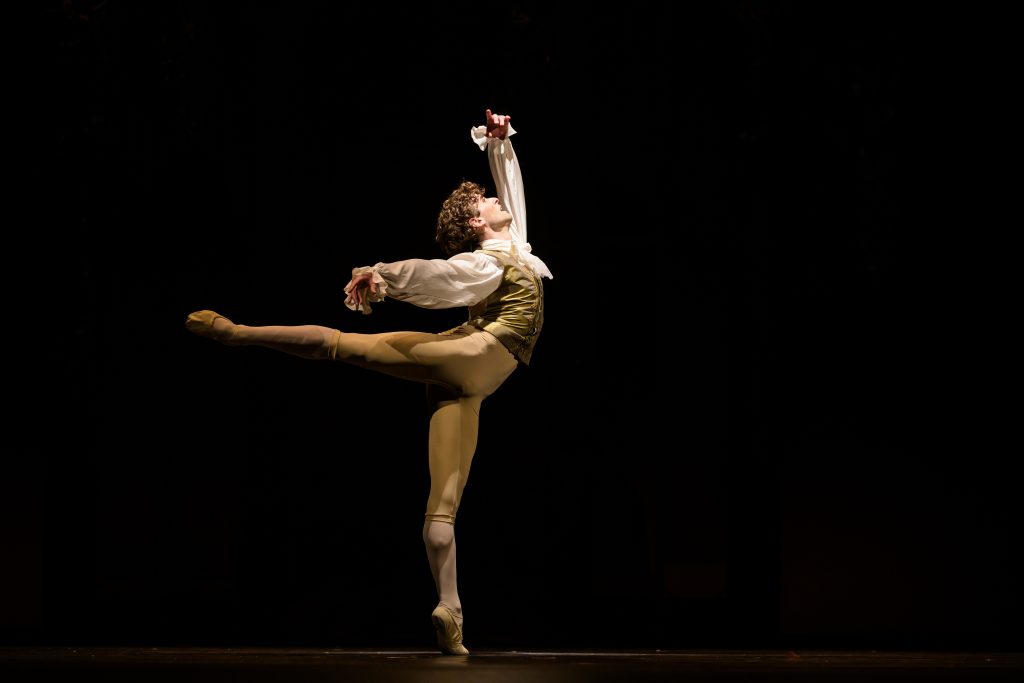
Avoiding injuries is a big topic.
I tried to explore this area more, the principles of strength training, it really helped me approach the roles better in the physical way. I was not born with a natural strength, I need to work a lot on my body to have strength for lifts, for partnering, for example. And I’m doing this since many years. I think without it, I would not have achieved what I have. It really boosts my performances and when I go on the stage, and I’m not worried, so it has also helped my mental health. I remember when I joined, I was this small guy, I couldn’t do a proper lift, I got injured, my shoulder popped. I started to understand it was not only about technique. But in the school, there was not such a knowledge of that. Finally, the world of dance is a bit more aware, and there are more programs designed for strengthening, complementary trainings for ballet dancers.
The problem is the ballet class itself is short and we focus on the technique, coordination, placement of the body in space etc., then you go straight to the rehearsal, which is the biggest part of our day. But the rehearsal can also be focused on the details and be more static. So, you actually don’t train the stamina! But you need it, for example as a corps de ballet dancer to sustain the four acts of Swan Lake. Dancers need to get in a good physical shape, gain endurance. Pilates, bicycle, everything helps. It’s so fascinating how ballet evolved. It became somehow harder in a physical way, the changes in the repertory are faster, it changed the physicality of the job. When we do so many shows in different styles, we need to take care of our bodies in a new way.
So, what are you doing, specifically?
A little bit of weightlifting, cardio, I like being outside, but I don’t do crazy stuff. I did rock climbing for one period, and when it’s good weather, I do lots of biking. Of course, you cannot do too much of everything, you need to have the knowledge of how much you can endure. And the rest is also important. This has also changed in the ballet world. In the past, if you listened to your body and rested a little, people looked at you as if you were lazy. Today, we already know what science tells us about the body.
Perhaps it’s because our whole lives are so focused on productivity. When you stop working for a moment and just exist, it’s already suspicious. There is also a stereotype that dancers must suffer, must push themselves to their limits, otherwise they are not doing their job well enough.
It’s all about balance. If you want to reach some high-quality level as a ballet dancer, you need to hear many times you’re not doing things right. It requires a lot of work, strength and a lot of practicing. So, from one side, you cannot allow yourself to be appeased and relieved, but at the same time, if you want to dance in high quality, you shouldn’t torture your body and your mind. It’s hard to find this balance, but I think it’s very important to try. We, ballet dancers, love to work in the studio and to practice until it’s perfect. Because we love our job; we are driven by passion. And it’s wonderful to have this kind passion, but you also have to be thoughtful and smart.