by Michal Rezek
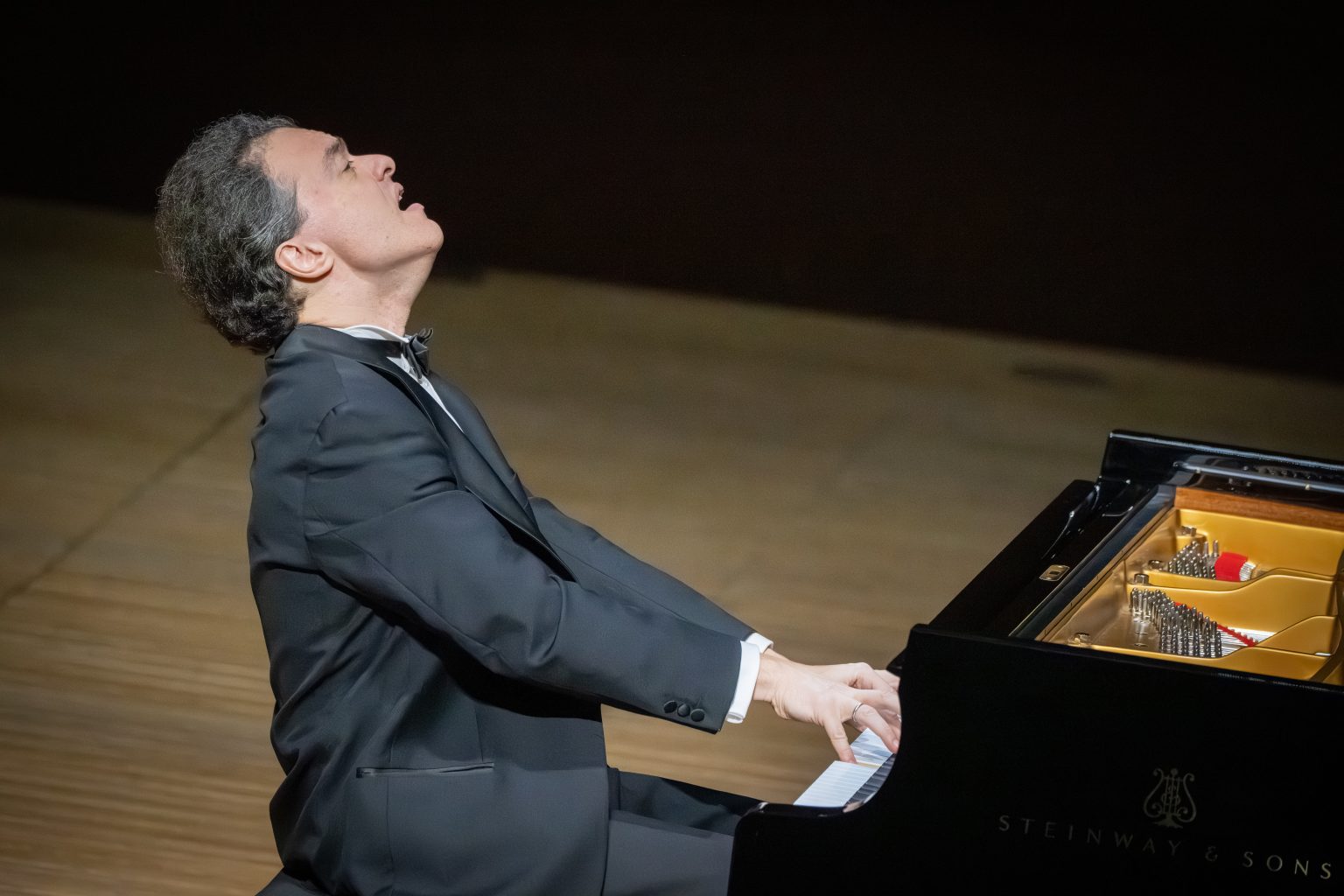
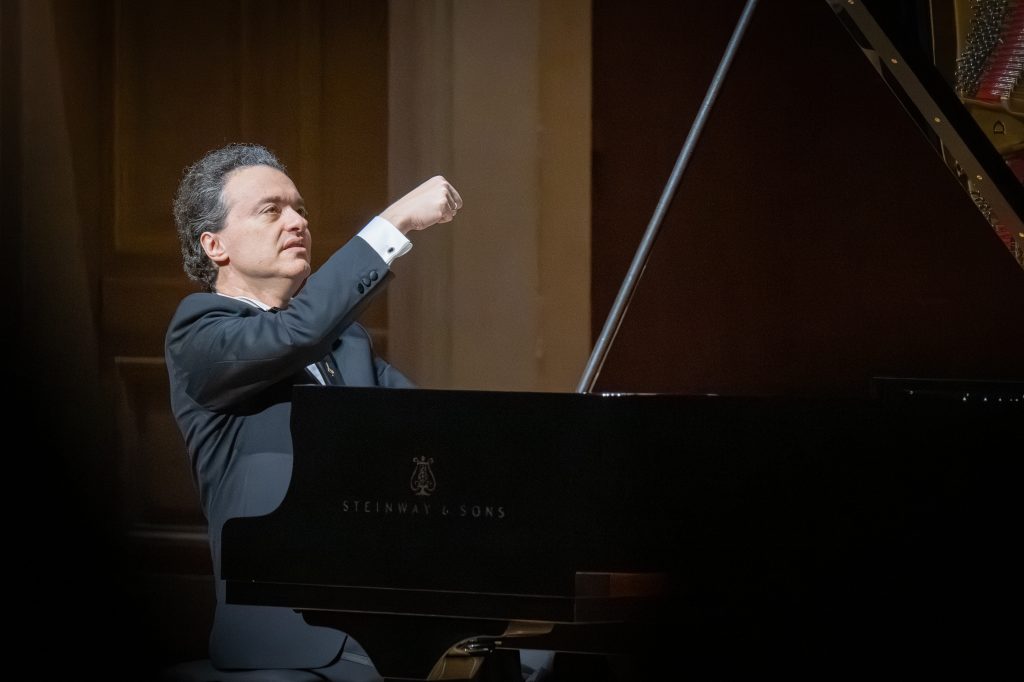
On 11 January 2026 at 5:30 p.m., Prague’s Rudolfinum welcomed Evgeny Kissin, who appeared in a solo recital as part of his third residency concert with the Czech Philharmonic.
An interpreter who needs no effects
A completely sold-out hall, bearing witness to the audience’s enormous and repeated desire to encounter the singular artistry of this master pianist, reflects an almost habitual expectation of the very highest standards of interpretative excellence. Public anticipation was exceptionally high – after all, the longing to experience something extraordinary and unrepeatable is a natural human impulse.
Evgeny Kissin opened the recital with the rather substantial Piano Sonata in D major, Op. 10 No. 3 by Ludwig van Beethoven. This four-movement work follows a Classical formal design, yet already reveals the composer’s striking originality, both in its virtuosic technical and sonic demands and in the profound inner depth of the music itself. Kissin’s approach to the sonata was exemplary. At the piano, he realised with absolute precision and meticulous attention to detail what we now find codified in modern urtext editions of Beethoven’s works.
Taking into account the acoustics of the hall, he did not push for the fastest possible tempo in the first movement; instead, the chosen Presto was perfectly legible and transparent. Kissin avoided speculation or interpretative eccentricity – he sought no surprises, but played precisely what Beethoven wrote. Yet his vision of an energetic Beethoven, marked by bold dynamic contrasts, was fulfilled to the highest degree. His forte and fortissimo climaxes reached truly impressive heights; all the prominent sforzati in the score were fully exploited, and the alternation with cantabile passages in piano, almost always shaped with pronounced espressivo, created a dynamic and compelling musical image. Combined with impeccable tempo control and flawless metric stability, this resulted in a highly convincing opening.
In the slow movement (Largo e mesto), Kissin surprised with an exceptionally spacious tempo; nevertheless, the contrast with the first movement proved entirely persuasive. Given the chosen tempo, the overall dynamic level remained relatively elevated. Once again, Kissin made full use of the sforzati, constructing the movement with agogic precision down to the finest detail, while maintaining a commanding sense of overview and a deeply internalised emotional intensity.
I am particularly fond of interpretations that reveal Beethoven’s sense of wit and humour, and in the third movement Kissin achieved this to perfection. The final rondo, by virtue of its structure, often suffers from both intentional and unintended tempo fluctuations, which are difficult to avoid. Kissin, however, shaped the finale in an exemplary manner, bringing the entire sonata cycle to a compelling and coherent conclusion. It was a deeply impressive interpretation that reminded me – not only in terms of sound – of the finest performances by Emil Gilels.
The piano as an instrument of thought
Chopin’s Mazurkas are masterful miniatures, combining subtle, fragile lyricism with dance elements and a wealth of exquisite agogic, rhythmic, tempo-related and dynamic detail. Pianists most often present them as complete opus groups or as individual pieces in the role of encores. I was therefore very curious to see how the profoundly sensitive Kissin – whose interpretations of certain miniatures are uniquely delicate and refined – would approach this task.
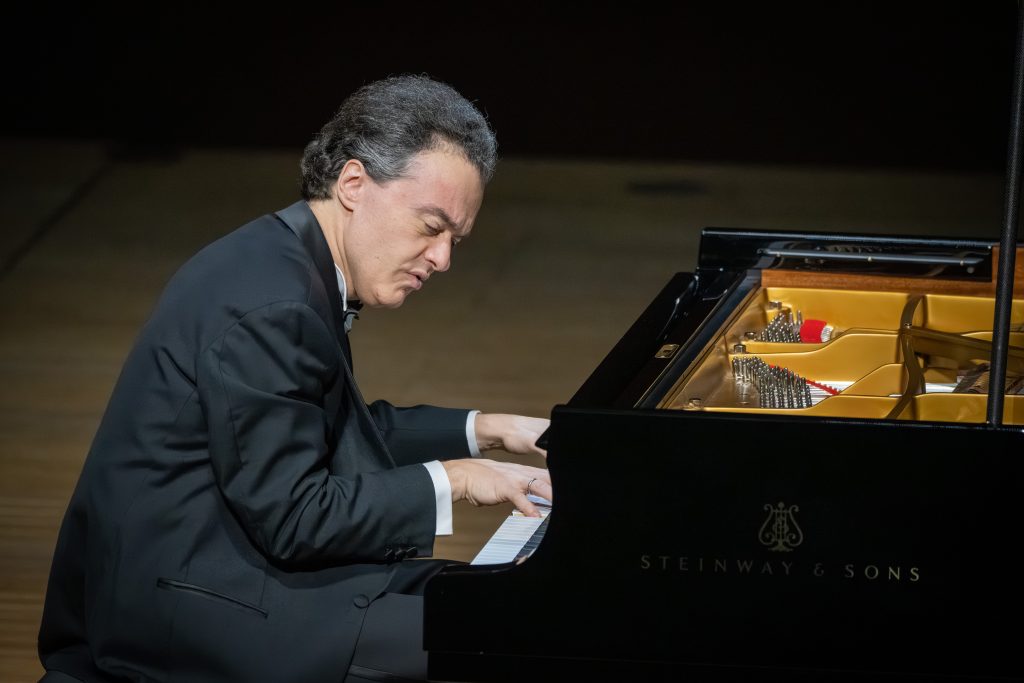
From various opuses, Kissin selected five Mazurkas: Nos. 27, 29, 35, 39 and 51. From the very first notes, it was evident that his attention and interpretative effort were directed along a path radically different from customary approaches. The primary parameter was sonic density – enormous, almost symphonic fortissimi in relation to the scale of the pieces. Kissin rendered most of the lyrical passages and gentler thematic material with pronounced, almost painfully expressive espressivo, while consistently suppressing the dance character of the Mazurkas.
I quickly realised that this interpretation could not be judged as “Mazurkas” in the traditional sense. What emerged instead was a monolithic statement, unified by urgency, anguish, a sense of despair, counterbalanced by stubborn resolve and raw energy.
When the final Mazurka in F minor, the last work Chopin completed, faded away, and I saw Kissin bow with a rigid expression, devoid of his familiar warm smile, it became clear that he was attempting to communicate something that this type of music may not, in itself, be capable of expressing fully. After the concert, I told him that his Chopin had caused me physical pain in the chest. His response was brief: There is a great deal that is bad and evil in the world today.
Schumann as an existential statement
The second half of the recital offered one of the great masterpieces of the Romantic piano repertoire: Kreisleriana, Op. 16 by Robert Schumann. The work is structured into eight sections, alternating between energetic, eruptive movements and passages of lyrical reverie. This diversity of character, together with the richness of both musical and extra-musical elements, creates ideal conditions for a creative interpreter and an emotionally receptive audience alike.
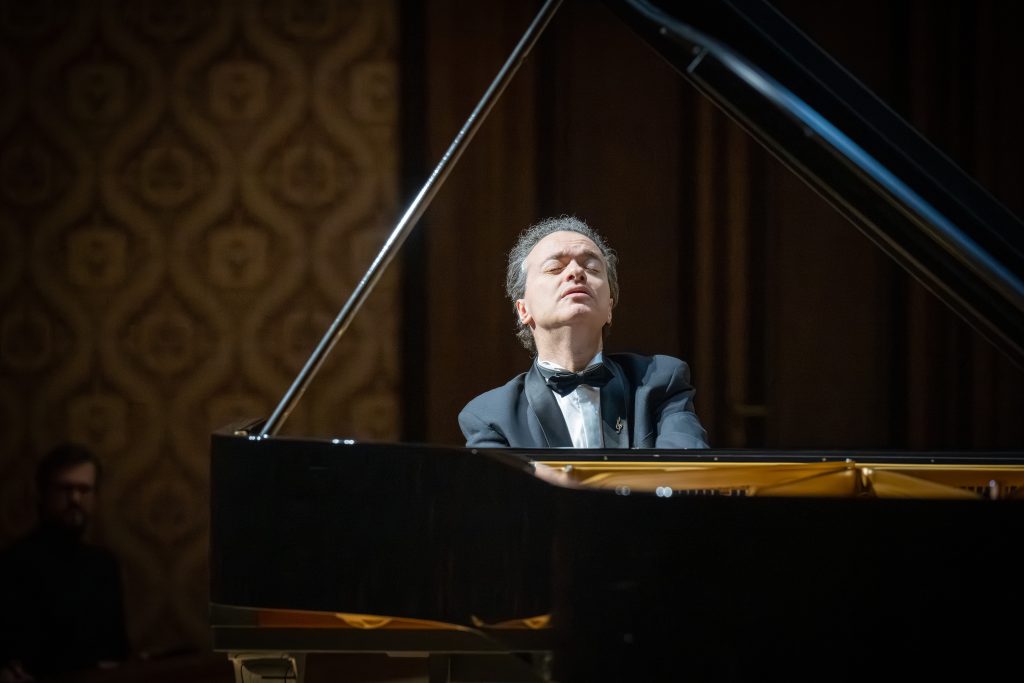
Kissin delivered a performance of rare and almost unrepeatable stature. What he achieved in terms of tempo and sonority in the first – and especially the seventh – movement defied conventional comprehension. In contrast, his ability to render extreme subtlety, to almost suspend tempo and musical flow at the lowest dynamic levels, generated an atmosphere in the hall that was beyond verbal description. For me, this was the unattainable summit of the entire evening. How regrettable that such an experience cannot be revisited at will.
When the performer plays exactly what is written – and yet more
From a virtuoso of Evgeny Kissin’s stature, one naturally expects a work of overt, high-wire virtuosity. It is not that Kissin failed to demonstrate his phenomenal technical equipment – until this point, he had simply employed it as a means toward higher artistic goals. Yet many listeners, less intellectually inclined, delight in works where virtuosity is foregrounded and the music is built primarily on sheer bravura effect. Yes, I count myself among them.
After the magnificent Kreisleriana, the programme concluded with Liszt’s Hungarian Rhapsody No. 12 in C-sharp minor, an imaginative, sonically rich and thematically infectious work that I am always happy to hear. I know perhaps five or six of Kissin’s interpretations of this piece; the earliest recording in my collection dates from 1990. One might reasonably assume that thirty-five years of acquaintance with a work is sufficient to understand it.
From the moment Kissin walked onstage, it was evident how much he was looking forward to the Liszt. As soon as he plunged his hands into the keyboard in a dense fortissimo, a smile spread across my face. Within the first, relatively inconsequential page of the score, he had already transported me into a state of euphoria, which only intensified thereafter. What the Master delivered was phenomenal. Many pianists can play fast and loud with success; very few can do so with such a broad and vividly coloured tonal palette.
There is a fascinating tension between Kissin’s palpable, elemental musicianship and his ability to maintain absolute control over the tempo and dynamic trajectory of such a temperamentally charged composition. Each time I thought he had exceeded a playable tempo and would inevitably have to slow down or falter, he proved me wrong. He drove the tempo relentlessly toward the final section in a manner that could only have been the result of complete control. Sonically, he even pushed beyond the limits of the concert Steinway and its meticulously regulated hammers.
The ending was exactly as it had to be. As the final chords resonated, part of the audience leapt to its feet immediately, the rest within ten seconds, and the slowest within fifteen. It was evident that the artist himself took great joy in the audience’s enthusiasm – there was nothing more they could possibly give him. His evening-long effort was rewarded with a modest, rather meagre bouquet, likely sourced from a supermarket.
The first encore was Chopin’s Étude Op. 10 No. 6, performed with serene contrast and a beautifully singing, quintessentially Chopinesque cantilena. The second encore was ¡Viva Navarra! by the Spanish composer Joaquín Larregla y Urbieta, a piece unfamiliar to me, rich in Spanish colour and virtuosic technical writing. The evening concluded with a deeply poetic reading of Tchaikovsky’s May (White Nights) from The Seasons, Op. 37a.
It was a magnificent evening, and we shall await Kissin’s fourth residency concert with the Czech Philharmonic with great anticipation.
Czech Chamber Music Society: Evgeny Kissin
11 January 2026, 5:30 p.m.
Rudolfinum, Dvořák Hall, Prague
Programme
Ludwig van Beethoven: Piano Sonata No. 7 in D major, Op. 10 No. 3 (24′)
Fryderyk Chopin: Mazurka No. 27 in E minor, Op. 41 No. 2
Fryderyk Chopin: Mazurka No. 29 in A-flat major, Op. 41 No. 4
Fryderyk Chopin: Mazurka No. 35 in C minor, Op. 56 No. 3
Fryderyk Chopin: Mazurka No. 39 in B major, Op. 63 No. 1
Fryderyk Chopin: Mazurka No. 51 in F minor, Op. 68 No. 4 (12′)
— Intermission —
Robert Schumann: Kreisleriana, Op. 16 (30′)
Franz Liszt: Hungarian Rhapsody No. 12 in C-sharp minor (10′)
Performer
Evgeny Kissin – piano
Reviews of Evgeny Kissin’s previous concerts can be found here and here.