by Lucie Kocourková
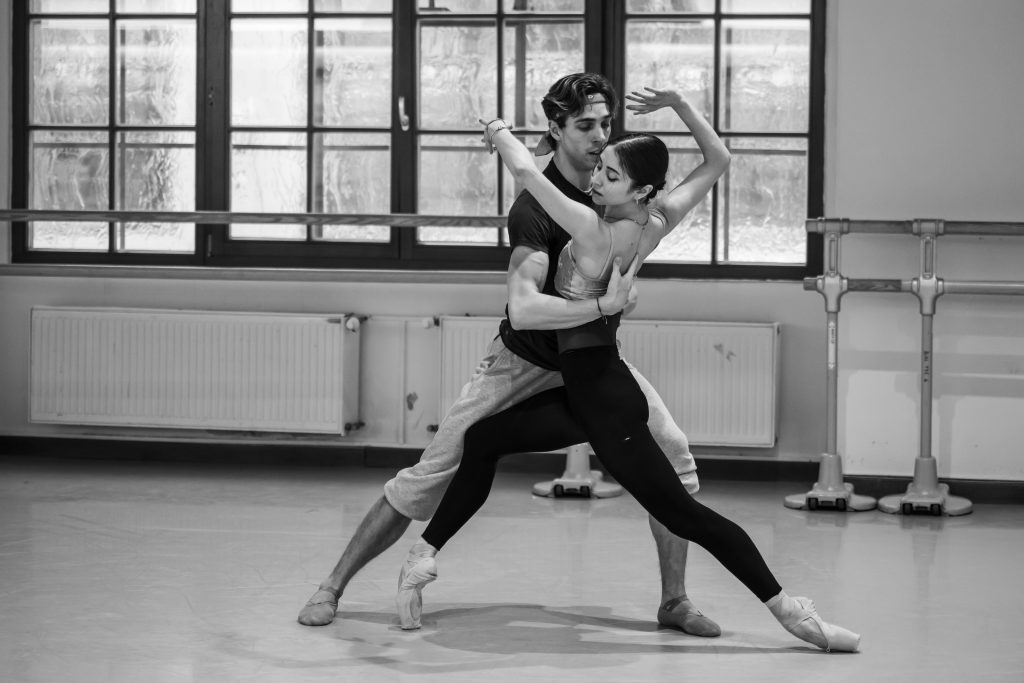
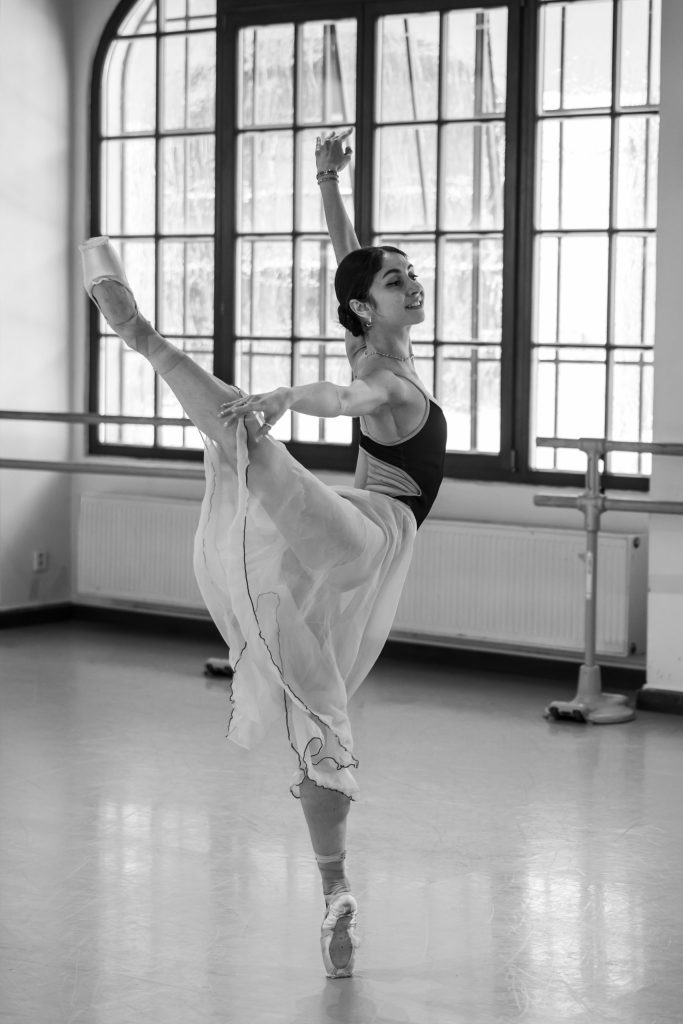
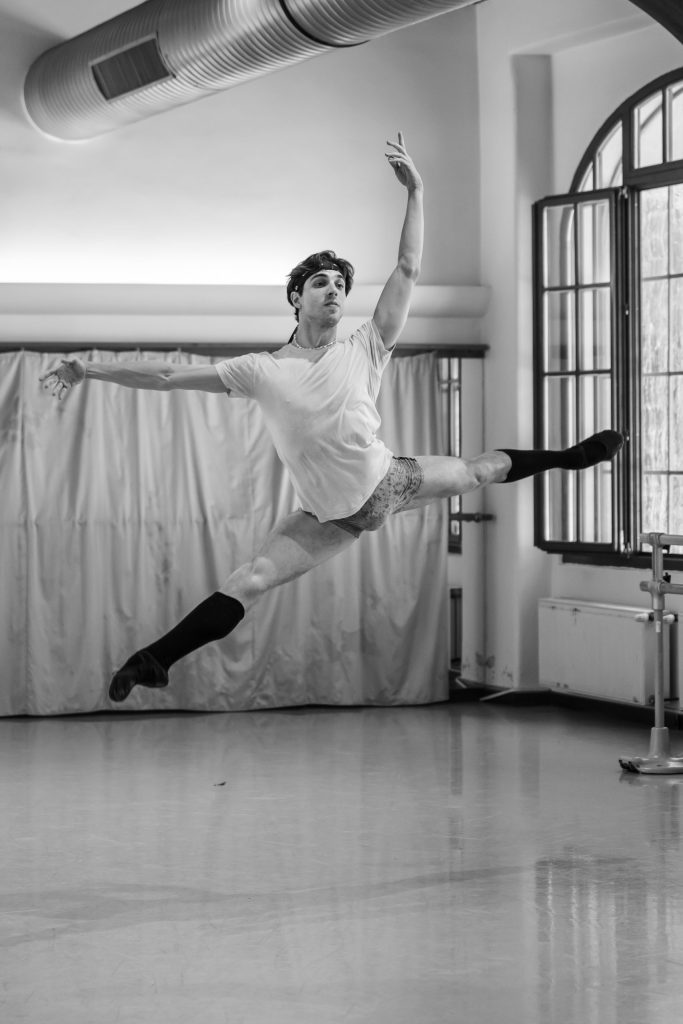
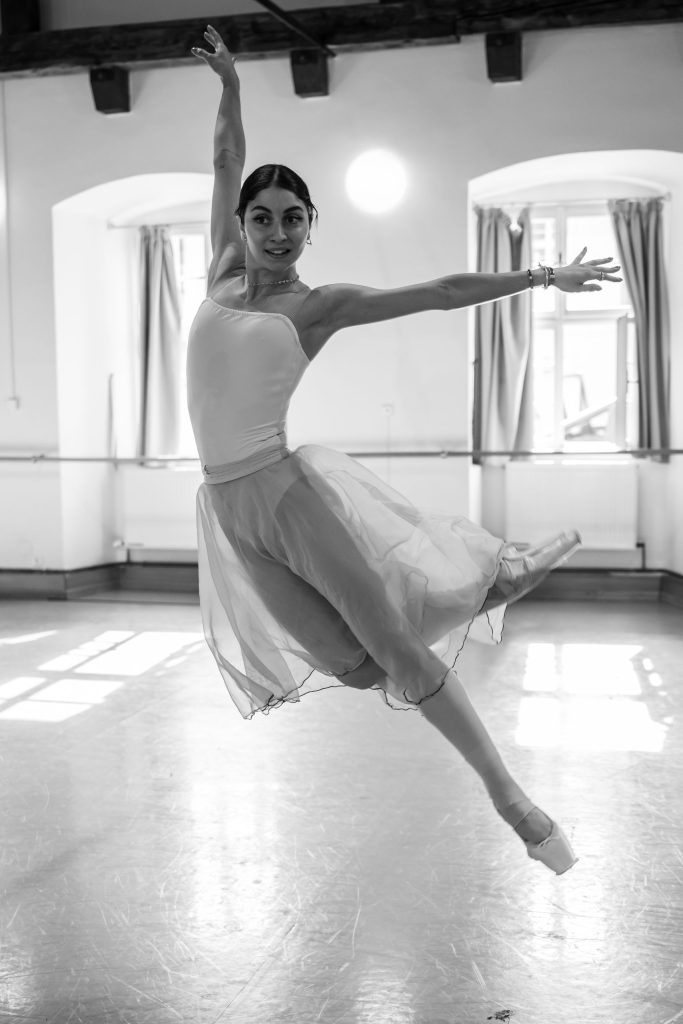
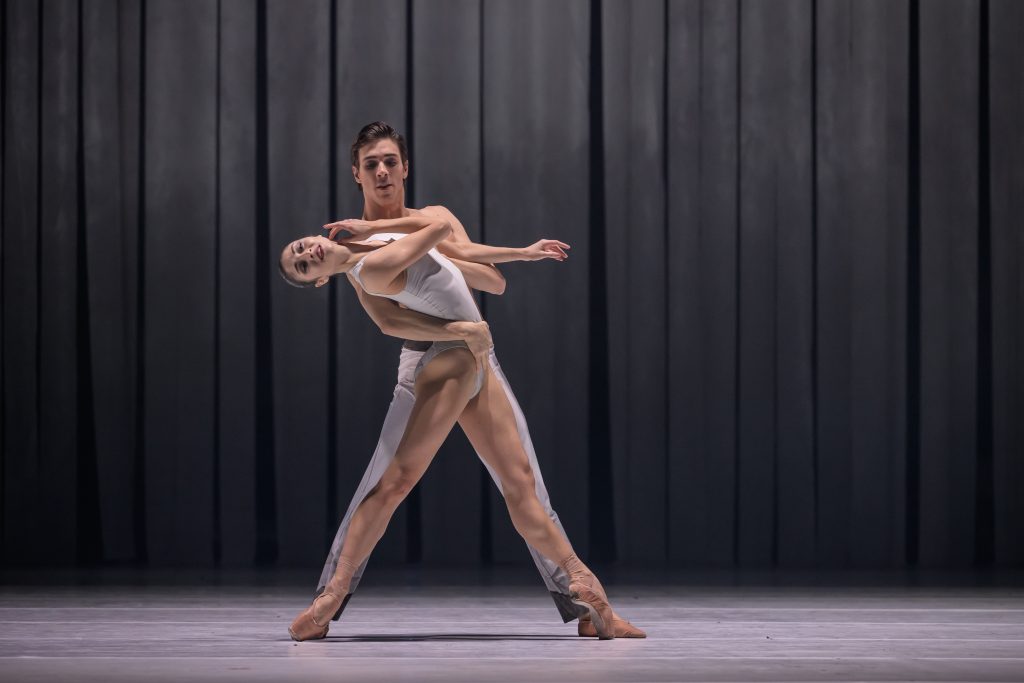
In just a few days, on June 18 and 19, audiences can look forward to the Czech National Ballet’s premiere dedicated to the work of George Balanchine. The choreographies Who Cares? and Brahms-Schoenberg Quartet will bring the State Opera stage to life. We spoke with soloists Nina Fernandes and Erivan Garioli, who dance in both works and also regularly partner on stage, to share their experience with the distinctive style of George Balanchine, who is recognized as the founder of American neoclassical ballet. Together, we introduce the audience to the characteristics of his signature style, which both soloists have encountered numerous times throughout their careers. Since they also form a couple in other productions, we explore aspects of partnering in ballet, delve into their years of training, and see just how complicated the journey toward a dream can sometimes be.
How many times have you already encountered the work of George Balanchine?
Nina Fernandes: I myself have danced over 15 Balanchine ballets throughout my career. I first danced it in my very first season in the USA as a pre-professional dancer, I danced Serenade with the main company of Washington Ballet at the time. During the 5 years in my previous company (Miami City Ballet) I had the opportunity to work very closely with the style since it was a sister company to the great New York City Ballet, and it’s where I built an extensive repertoire in this style, with roles from Corps de Ballet to Principal. I remember when I did it for the first time it felt very different and hard. After working on it for a couple of years, your body adapts to the style and you get to do it with more ease.
Erivan Garioli: I had the opportunity to first encounter his work while I was very young, at the age of 15. I did a summer program at the Miami City Ballet School where the daily training was also based on Balanchine. Later on, at Singapore Ballet I was part of Serenade and Theme and Variations.
Does it feel different to you now, with the passage of time and the maturation of your interpretation? And in what ways?
Erivan: Absolutely. Like everything in ballet, I believe we have to work and condition our bodies to Balanchine’s technique. That said, I struggled a lot in the past to adapt my young self to its style, along with different muscles pain and soreness. Today I see it in a completely different way. What used to be just hard, I see it now as a fun challenge. After all, Balanchine’s style is big, extra and very enjoyable. It doesn’t make it less hard, but it brings a good feeling during the dance, specially such a spectacular ballet like Who Cares?
Into the Depths of Choreographic Style
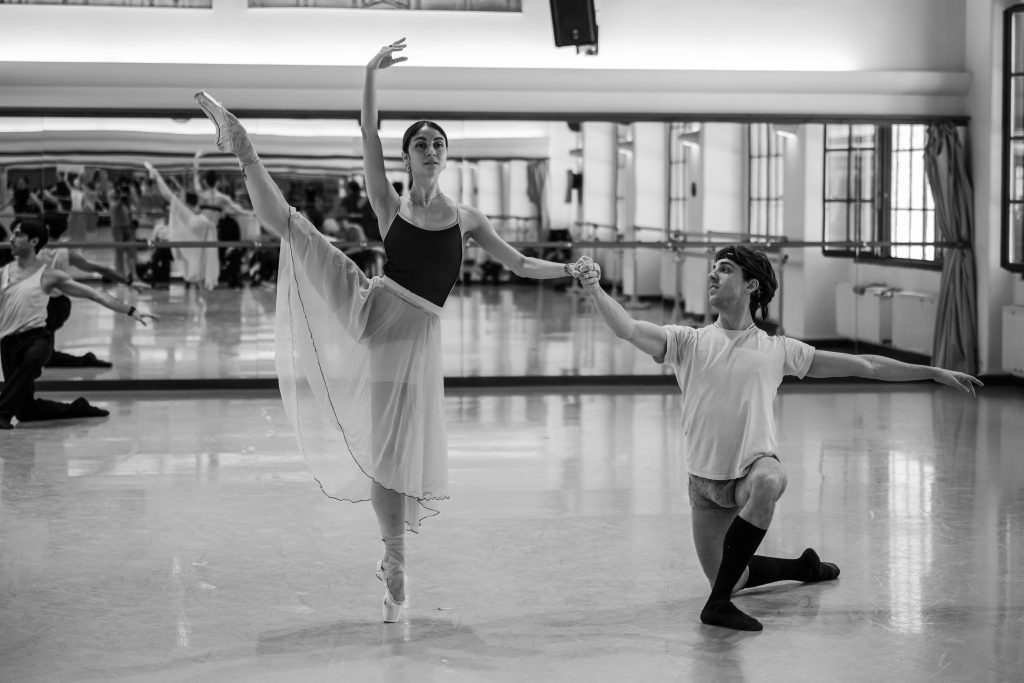
Generally – how do you, or rather how did you approach and accept the differences of the American/Balanchine style? To give our readers a clearer picture, some elements are executed differently even though they have the same name, hands in poses extend beyond the field of vision and the arms point at angles beyond what is required in “our” classical style, the chest shifts forward, the attitude shortens, the centre of gravity shifts, the body’s expression is meant to be more open, showing off. Not to mention the speed of the small jumps, changes of direction… I used to take come classes with one American-Czech ballet mistress and it’s coming back to me now; it was fun but also confusing!
Nina: In my previous years working closely with the Balanchine masters I could learn all the differences and particularities from the style. Mr Balanchine created his own style based on the Vaganova school, so the structure is still quite classical. The way I see it is that he extended the style, turned into something more extreme, you can even say more “exaggerated”. You have to embrace it, it’s hard on the body in the beginning, you use a lot more muscles, you are constantly moving, and the steps are much quicker. The body feels the difference, but the more you do it, the better it feels. In a company like Czech National Ballet, you have to be more open minded about it, you can’t hold back to the strict movements from Russian/European techniques, otherwise you might lose the whole essence of the Balanchine and the performance will fall short.
Erivan: We are lucky to be exposed to so many different choreographers here at the Czech National Ballet and liking or not, each one will have their own style. I see it as a chance to learn and evolve. Of course, not many will be as big and important as Balanchine. I believe that most of us dancers grew up watching inspiring stars in Balanchine’s productions. The difference of the arms, the contrast in directions, the speed of turns and jumps, while focusing always towards the audience, all of this seems small differences but whenever you have to put in your body, it presents as a very big challenge. Imagine that I’ve danced ballet for 21 years to achieve what I can do nowadays. How long should I train to change my technique? It is not easy. Luckily, men’s technique does not change as much as in the point shoe work.
Regarding my own body, I personally have a lot of fun with the freedom of my arms. The pirouettes are harder; it changes a lot the way you take out and it is stressful because I never know if it will work out or not. In jumps, I struggle with sharp changes of directions, they are fast and many times feel unnatural, like the turn I would definitely not take! It keeps the brain on fire while the legs are burning through the speed.
It is hard to dance a ballet without a narrative because it all depends on the relationship you create with the audience. In Who Cares? I feel like we have to deliver charisma and joy while executing hard steps, since there is no storytelling, it can be boring if we are not giving it all!
How are the assistants to choreographer Nilas Martins and Christian Tworzyanski?
Erivan: Nilas and Christian are very good at pointing how it should be, they also show us many inspiring videos whenever we are having a hard time to comprehend the step. But above all, they are kind and understanding. They know that it is not part of our training and I have to say that this process has been very pleasant because of them.
We had the chance of having one class with Nilas and it was fantastic. Not our usual class, completely out of our comfort zone and the work is so different. Many tendus and a very dancing class, we were soaked in sweat by the end of it!
Balanchine lets dancing bodies literally sing, embody the music. Do you feel it and do you cope with it in his choreographies?
Nina: Balanchine gave a lot of artistic freedom to the dancers, not to change his choreography nor his ideas, but to put the dancers’ personal nuances into the performance. No dancer is the same, and I don’t think he ever wanted that. Every performance should be unique and different but yet the same. His choreography plays with musicality to the edge, uses speed, constant arm movements, it takes you to the limits. Stamina plays a huge role in his ballets. It’s no easy task to make it look “effortless”.
The learning process is very hard, the body takes time to adjust to any new style, but in this case the struggle is part of the process, you have to adapt, learn how to breathe differently, endure longer periods without a “break”, but in the end it adds on, both to your strength and to your technique.
Erivan: Balanchine’s works are very musical. That’s why it’s so fun to dance, as there is a step for every note, or maybe even two or three. (laughs)
How is your musicality in general? And anyway – do you like jazz and swing?
Erivan: To be very honest, I do not consider myself naturally good in musicality. I have to study the music we will dance to, until I fully understand the notes. Like that, I get comfortable to play with it and dance with my soul instead of executing steps.
I do like jazz; I used to frequent this bar in Singapore that would organize Lindy Hop classes and it was so fun! But my heart goes to Bossa Nova, what I call the “Brazilian jazz”. It comes from Samba and takes some influence from the American jazz in 1950s.
Balanchine didn’t want dancers as machines reproducing movement on stage, but real men and women with energy and the relationships that arise between them. Do you perceive this aspect of Balanchine style, which is more about feeling than technique? Perhaps, as fiery Southerner, this feels familiar and comfortable to you, or is Southern fire just a cultural stereotype?
Erivan: The guys in Who Cares? have long pants and you can barely see our legs. I’m saying that so you understand that the whole ballet has to be seen with our upper body and spacing. We have to dance extra big, pouring a lot of feelings on it while maintaining the formation and choreography. The sets and lights are simple, so just doing the choreography is not enough.
To be fair, it is hard to not pour emotions whenever you are dancing to such beautiful music! Oh yeah, my blood gets super hot just by listening the orchestra. From all the stereotypes we have to face, this is certainly a correct one – and I’m happy about it.

The Essence of George Balanchine
And what about that requirement for fluid, never-ending movement? We’ve already touched on this…
Erivan: Sure, Balanchine’s works are not meant to rest on stage, you have to build up your stamina because the end of your movement is the beginning of the next one, until you are done and bowing to the audience.
Nina: Balanchine ballets are often made in an empty space, no grand sets, no storytelling, simple lighting. The main aspect is the dance and the dancer, hence why it is so powerful. Most of the time you have the whole empty stage for yourself, how can you fill up all that space by yourself? You have to dance big; you have to move larger than ever. In each choreography there are many steps in very little time, the movements are constant, you have to learn how to play with it, so the audience doesn’t feel overwhelmed, so they feel the lightness. Even when he creates ballet with a larger group you will see that nobody is standing still, at any moment. The time to “rest” is in the wings (out of the stage) if you are in you are on at all times.
Which of the premiere choreographies presents a greater challenge for you, and in what way?
Nina: I can’t choose one. All my roles in this premiere are very different, they all present different challenges. Some require a quite strength, silent and still, other is a mix in between explosion of power and at last there is the ones with passion, energy and excitement. They all have their particularities and in each I am presented with a different personal challenge.
Erivan: The five guys in Who Cares? and the four guys in the first movement of Brahms-Schoenberg Quartet are harder than it looks. The number of arms movements and small details that have to be perfectly synchronized with the other guys are insane! It is a very symmetrical choreography, but as I said before, there are so many movements per second that it does bring a concentration challenge.
What is the essence of Balanchine’s style specifically for you?
Nina: For me it is a lyrical mix in between power, freedom, strength and joy.
Erivan: In one phrase: Music made visible through speed, clarity, and endless movement. It’s like the dance often seems to exist for the music, rather than the music accompanying the dance.
Going back to the work of the assistants of choreography, how do they approach the rehearsal process, how are the pieces developed?
Nina: The both assistants are spectacular. They came in very prepared. They both know the style very well and lived it very closely. They have lots to offer and like I said, they appreciate the particularity of every dancer. They taught us the choreography and they presented us with different ways to dance it. They accepted suggestions from us, and they would say if it fits with the choreography or not.
Erivan: Their goal was to make sure we all had the same base. Different than in a narrative ballet where we have a personality, they focus more on our intentions. They know exactly which emotion we have to bring in each step. While they give us freedom to dance as individuals, the precision must be on point.
By the way, that ballet mistress I knew also constantly praised and encouraged everyone all the time; I had the feeling that it’s just part of that American style – are these assistants also so positively motivating?
Nina: They are both very nice to work with. They do give us motivation, they constantly lift the atmosphere, they want us to have freedom but not to look bad, so they guide us to the best direction for a good build of character.
Erivan: They are very positive. They bring joy to steps and they have a kind way to pass corrections. That doesn’t mean we don’t get tons of them all the time. (laughing)
By the way, what kind of motivation works for you – praise, or hinting that it could be better?
Erivan: Personally, I’m all about details. I like to know what I am doing that does not look nice and could be better. I take these hints in a good way. Although it is great to be praised from time to time, so you get a motivation shot for the next challenges.

A Feeling of Safety with a Dance Partner
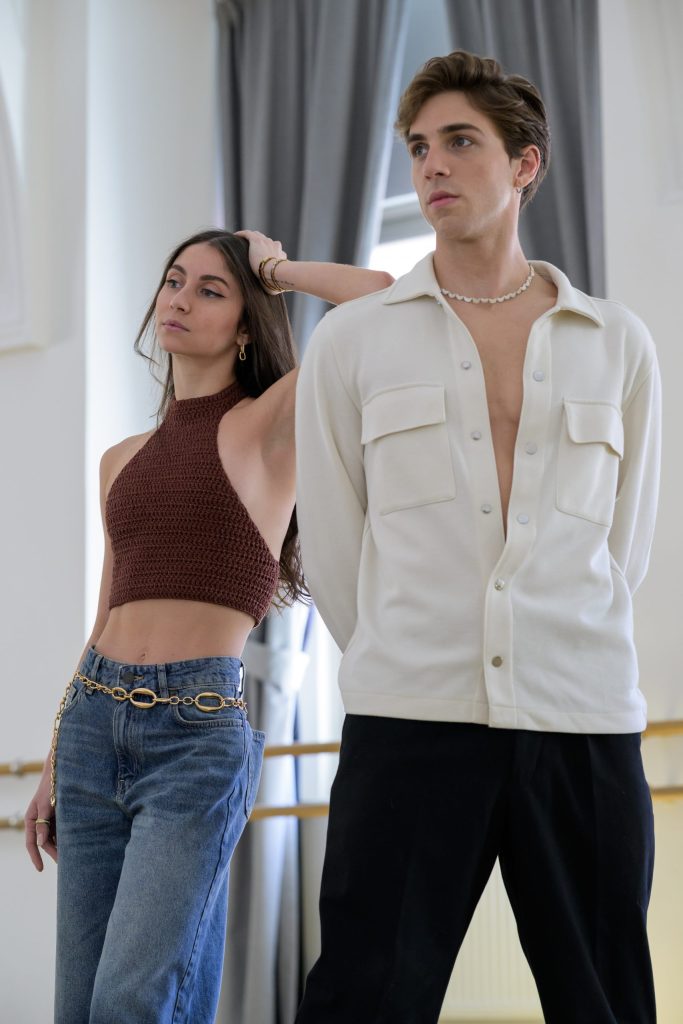
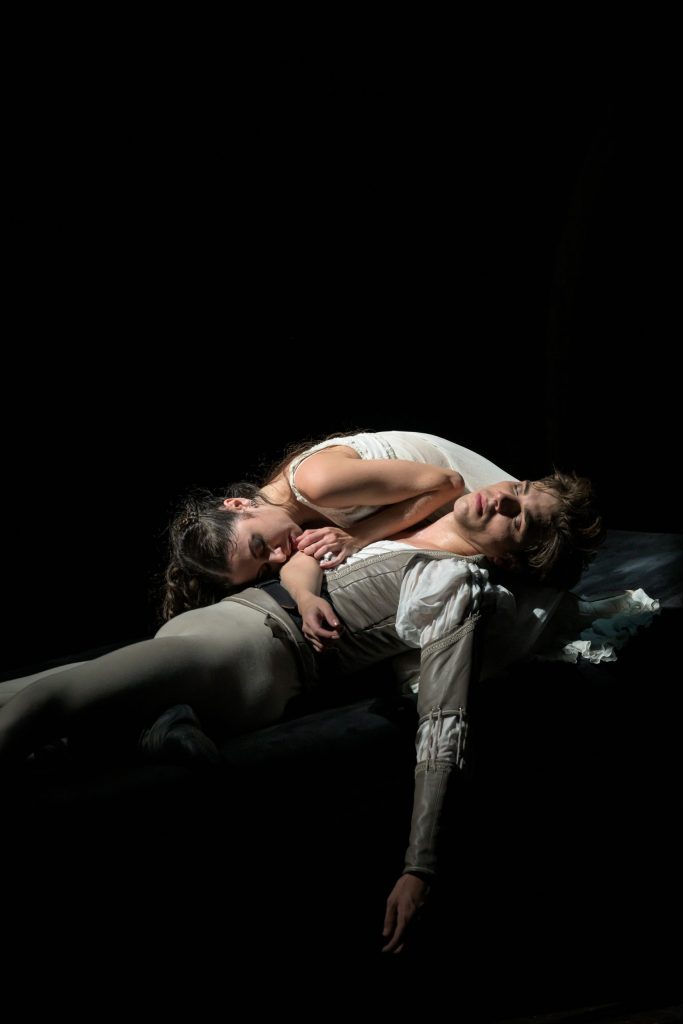
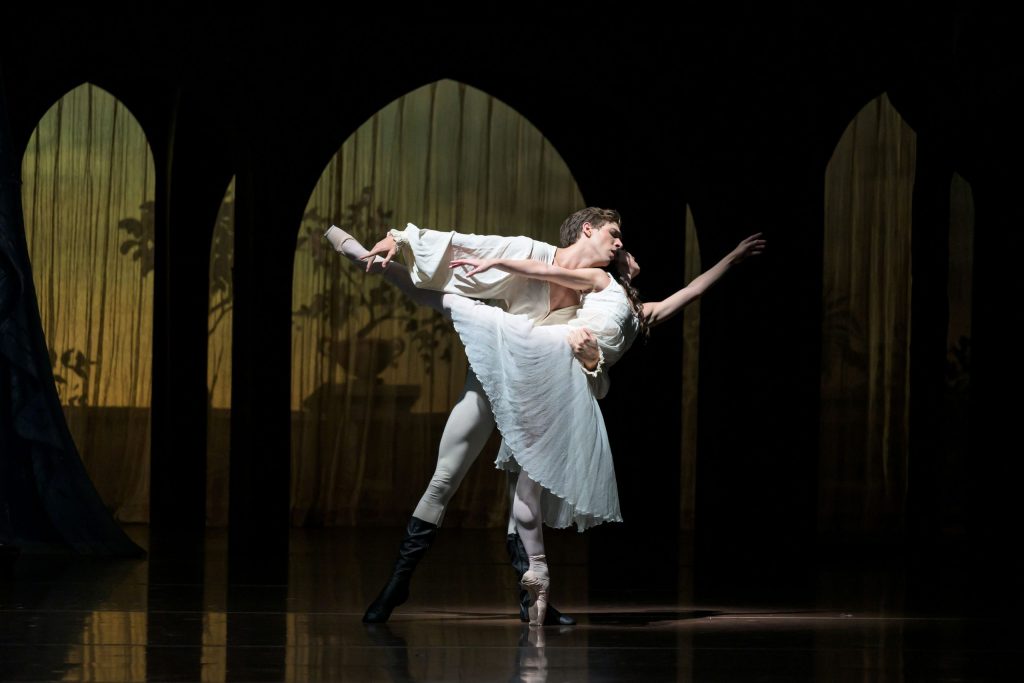
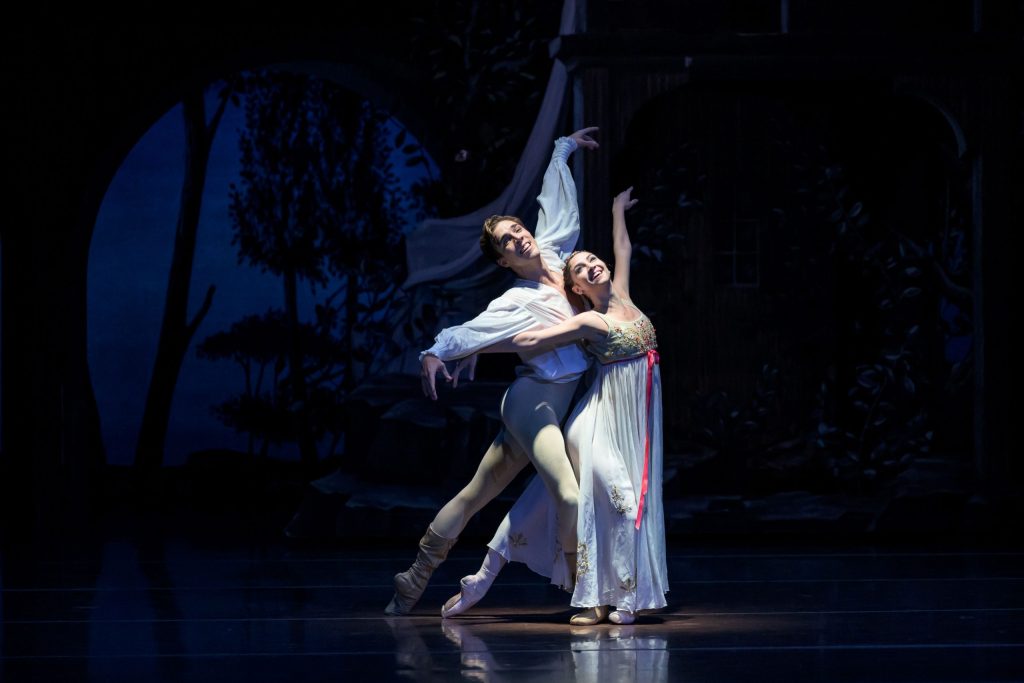
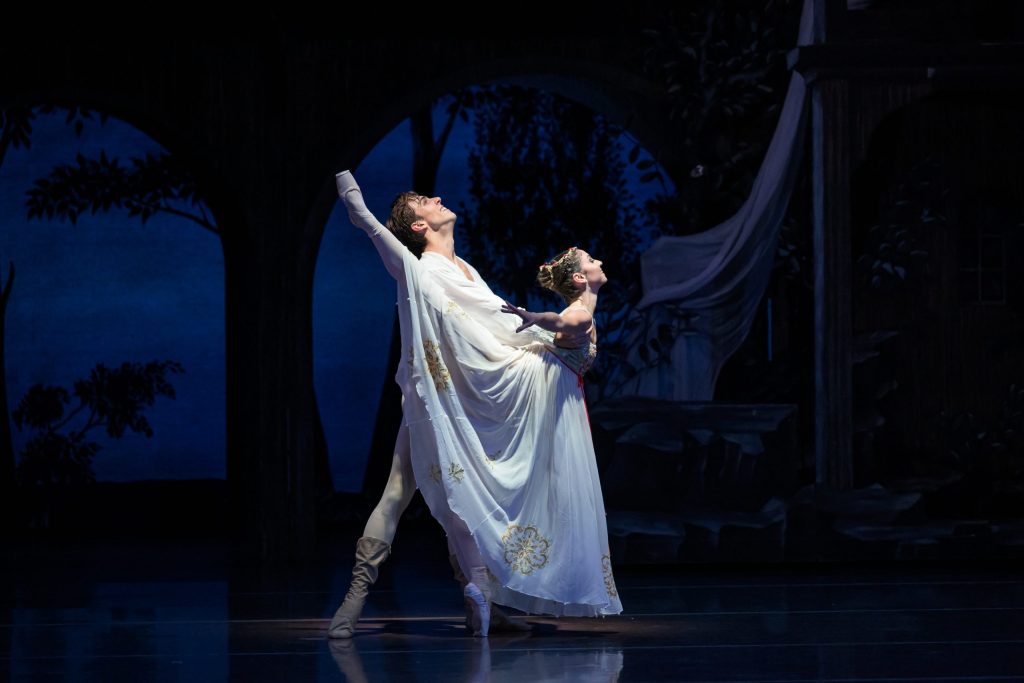
You dance together, for example, in Coppélia or in Cranko’s ballet Romeo and Juliet or 4 Seasons. How did you become a dance couple? Do you have a say in who you dance with, or is it random, and then once “chemistry” develops between a pair, they’re often cast together again and again?
Erivan: We can’t choose who we dance with, it’s chosen by the director and choreographers. A lot of things are taken in consideration, like proportions, looks, experience, balance for all casts etc. But it is true that once a couple works out well and they develop something special, there are more chances of being casted together again.
Nina joined the company when I started to get more solo opportunities. I was meant to have my premiere as Romeo and she had just danced Juliet in Miami City Ballet couple months before. Not only this, she was also the perfect height for me. The director, Filip Barankiewicz, saw a good opportunity to create a Brazilian duo that I believe worked out pretty well! (laughing)
I assume that even though you were trained at different schools, your approach to dance technique is rooted in similar foundations. Does that help you in your partnership? And do you feel a difference with other dance partners?
Nina: Maybe. Obviously, your training does reflect on you as a dancer, but sometimes that’s not only it. Some dancers are more natural, they get things more quickly and others can take a little bit more work. The more you do, you tend to get better but there are always some exceptions here and there. Every dancer is different, and that makes every partner different as well. I think it’s more about the work of each individual dancer than any fault of any school.
Erivan: I’ve never felt much difference with any partner just because our base training is different. Experience changes a lot though; Nina is very versatile from everything she has danced so it is much easier to learn new material with her. It really depends. Sometimes, the match is easy and organic. If you go through a long learning process with a new partner, I would say that you will be fully synchronized next time you dance together. Then it’s like riding a bike, your bodies remember their way of dancing.
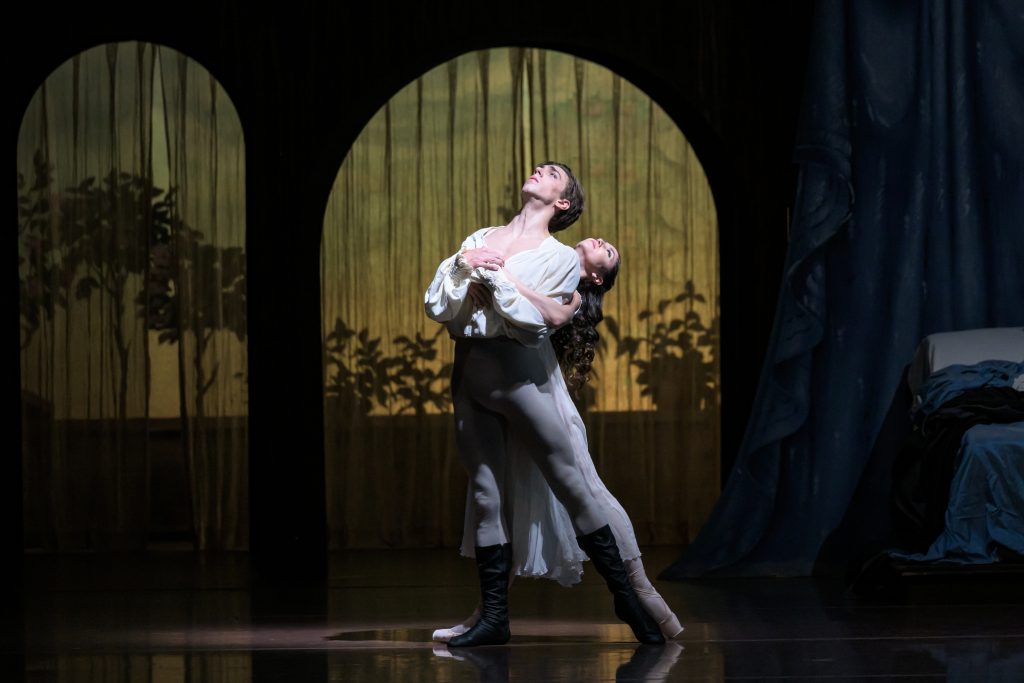
It’s often said that the ideal partner, especially a man, is one a dancer can rely on. But that’s actually a pretty general concept. What does it mean?
Nina: As a female dancer I would say that there isn’t an ideal partner, but obviously the ones with more experience, the ones that work with you 50/50 where you can share the load of a duet, you know they will be there for you when you are tired, you can count on them to hold you if something goes wrong and that can also bring up the best on each other are definitely the ones I prefer to share the stage with. Every partnership that ends up unbalanced, when you have to work harder to make things work, gets a bit uncomfortable. But as I said, many things come with time and experience. Sometimes we have to work with some dancers still in development. Not saying it’s a bad thing, but it’s a completely different partnering process.
Erivan: Feeling safe with your partner is very important. It’s not only about physical strength; it’s also about calmness whenever the nerves are tense. It’s about knowing their weakness and how to compensate so we both have a good performance. We all have bad days when it feels like you can’t do absolutely anything. If you can’t rely on your partner for these days, it makes the performance even more challenging and stressful.
In our dance conservatories, dancing with a partner is indispensable part of the curriculum. What about the Brazilian school – is partner work taught there? And is it taught well?
Nina: There really isn’t a “Brazilian school” there – we don’t train full time like at the schools here in Europe or North America. It’s an extracurricular activity. Basically, the way I learned how to partner was rehearsing for regional or international competitions. I believe that builds a different foundation. I was never properly tough how to do all the things I do, but I learned doing choreographies directly, that gives you a differential because I didn’t learn so square partnering, that you can’t apply later in choreography. But once again, it goes from dancer to dancer, some dancers will turn into amazing partners independently of their school training, and some will be more challenging independently of their training! It depends how they develop themselves as artists.
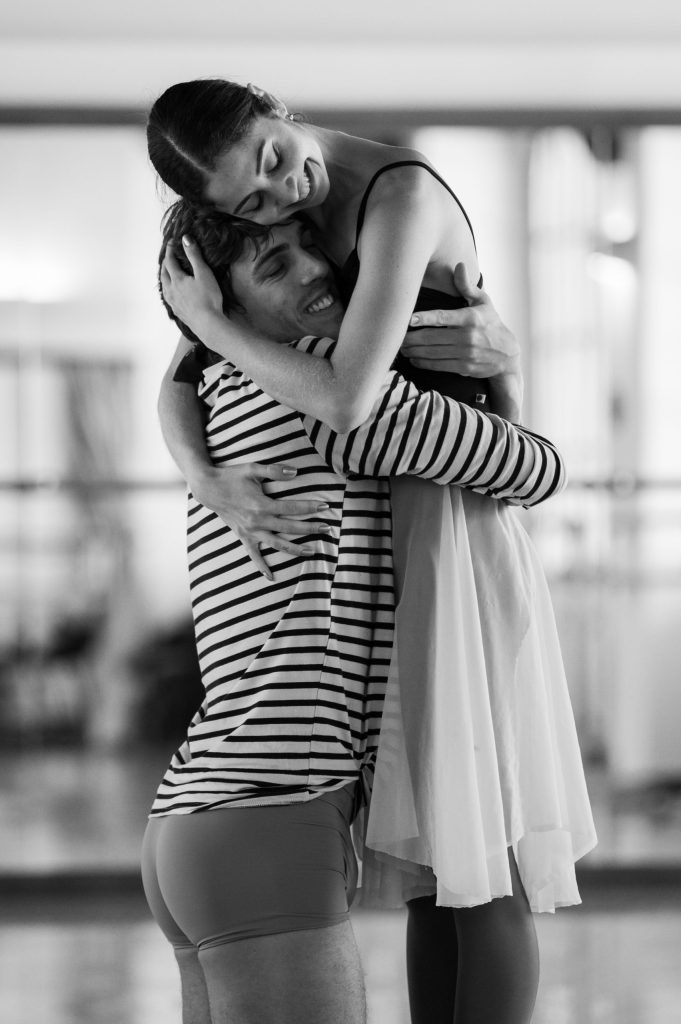
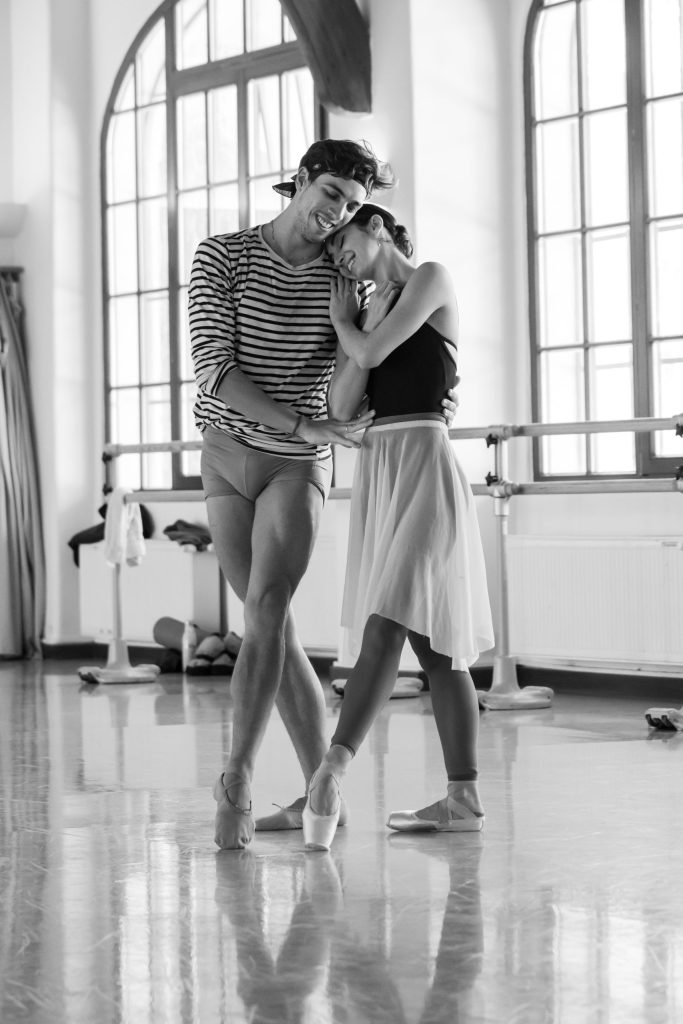
Erivan: Brazil is huge, each person comes from a very different and unique background as we only have one professional school down on the South. As Nina pointed out, most of us are raised in private schools that decide to bet in our potential and we go to competitions. I didn’t have partner work for the 11 years I was at my school. Ah, funny enough, Nina and I met years ago, in one of these competitions. Of course, we don’t remember each other as we were like 12 years old, but we do have a photo together!
Do you need to have a friendly relationship with your dance partner for everything to work well on stage, or can you completely separate the professional and personal aspects?
Nina: I generally have a very good relationship with all my partners, I can’t really complain. All of them have different aspects, but we make it work. I think it’s very unpleasant to dance with someone you don’t work well with, but we are all professionals in the end.
Erivan: In a big company like the Czech National Ballet, you end up dancing with people that you haven’t talked properly. It’s easy to separate and be professional. In fact, many times you get to know the person better because of this. You don’t need to be friends. It’s just more fun when it is the case.
An Attempt to Avoid Clichés, also about Improvisation or Pain
It already seems like a cliché to ask dancers if they prefer narrative ballets or abstract ones, but I’m curious: what do you enjoy most about one or the other on stage? What kind of enrichment does each type of production bring you?
Nina: There are some classical ballets that are incredible and you really enjoy yourself doing it and the same goes for neoclassical or modern ballet, some connects with you, some are really enjoyable and fun to do. But for every style there are some titles that are not for you, that can feel like you don’t fit for it. I have worked in some modern creations, it’s a different atmosphere, you have to embrace and adapt to the different style, but it can be fun.
Erivan: I love narrative ballets, I love to be a character where I have to understand, dive in its emotions and reactions. I had so many good moments that I’m just acting and not dancing. It makes me grow a lot in an emphatic way. Becoming someone different and feel everything this character had to feel. Abstract ballets are more subjective but it can be very rewarding. It needs to be a good production though… It relies more on the dance, the achievement of hitting notes while delivering emotions that can vary according to each person. Both types make you grow in ways that complement each other.
What about improvisation? In contemporary ballet, it’s now a regular occurrence – though in ballet this perhaps applies to the late 20th century and our present day – that the choreographer “searches” for movement material together with the dancers – when did you experience it first at the National Theatre? What was it like the first time?
Erivan: A good dancer is required to be also a good mover, regardless of their classical technique. Working on improvisation and contemporary adds the “spices” that you need to be different and touchy. My first experience with this collaboration at National Theatre was with Eyal Dadon in Artza. I was very young and would enjoy more now because you need some maturity to take the most out of it.
What are your feelings during such tasks, what have you discovered about yourself and within yourself, so far?
Erivan: The process of creating Lovebirds (part of the Avant-Garde evening) with this brilliant choreographer Marco Goecke showed me that I still have a lot to improve in these collaboration conditions. I struggled because my qualities come whenever I know what to do and the details I add on. However, delivering something without having a concrete base behind was a challenge. I felt obsolete and rigid. Now I know one more thing that I would like to keep working on until I overcome this barrier.
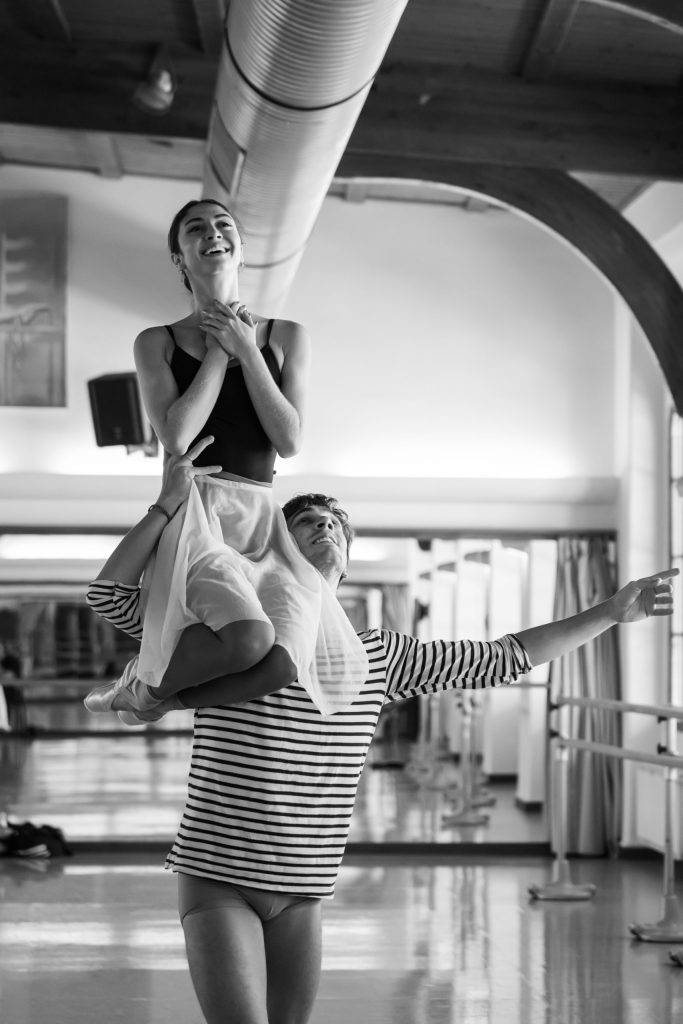
With many dancers, we usually also touch on the topics of injuries, accidents, and prevention. What specifically do the two of you do for prevention? Do you have any tips on what works for you?
Nina: I think I personally just try my best to keep my body in check. If something feels wrong, I quickly try to look for a solution. I try not to push any pain for too long, if it doesn’t go away in a couple of weeks it means that it needs attention. Also, with time and experience you let go of the thought that handling pain is strength, because it isn’t. Strength is to dance pain free with longevity. I’m obviously not talking about body aches, or muscle soreness or any kind of daily pain, but you sure know the difference in between what’s a “normal” pain and something that is definitely not right.
Some dancers still have difficulty handling some situations, they still push through some pain that they shouldn’t, believing that they are “okay” or that it’s “part of the job”. Definitely not including accidents, we can’t prevent any accidents obviously, we are all here to support anyone in that situation, but the “too often accidents” are no longer accidents but neglect with your own body and health.
That’s why is a sensible topic. Some people are already mature enough to understand to put their body above any opinion or pressure that can be made. Others still with this ancient belief that handling pain is strength and some still unfortunately bent to pressure to continue.
Erivan: Injuries are presents in a dancer career from the beginning to the end. I used to get injuries very often due to my hypermobility until I realized that gym for me is a must. Exercises, constant check-ups in physiotherapy and massages also help to keep your body healthy. I eat a lot so that I get the nutrients that my body needs… But I wish I had a better sleep routine.
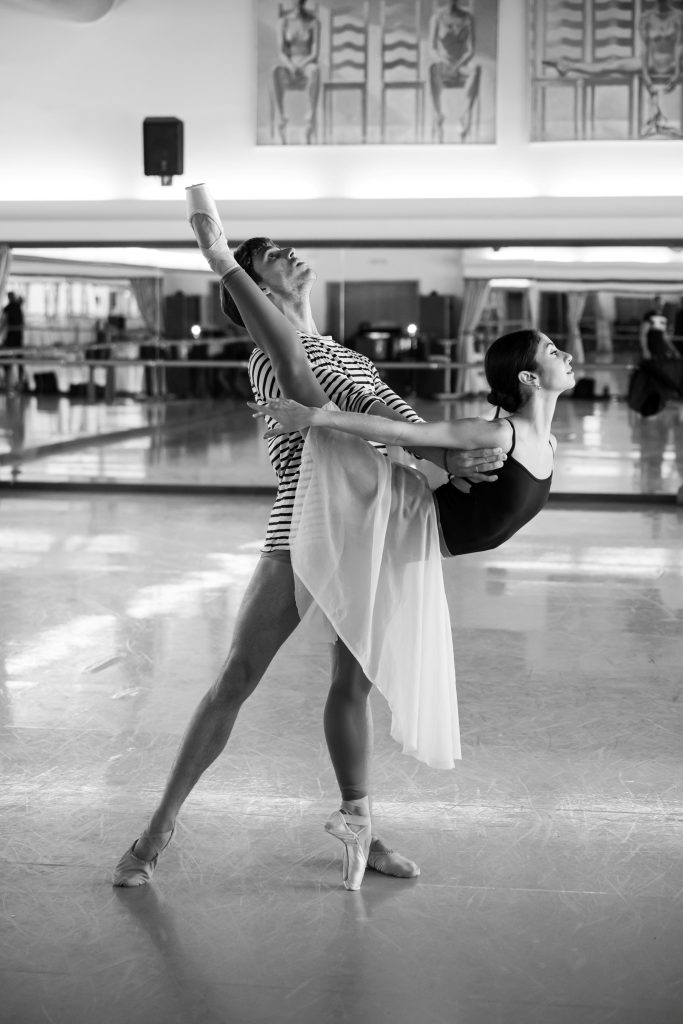
Rest and Adventure
How do you stay connected to the world outside the theatre? Do you have any hobbies related to other art forms, or are they completely unrelated to the arts?
Nina: After work hours I try to completely disconnect, not that I need to be doing anything specifically, but I will not be doing work outside of work. I like TV series and to watch some sports. Honestly just like to keep my mind free and off ballet.
Erivan: To be honest, the company life is very demanding and sometimes it’s hard to keep an eye outside. I have my old friends group chat and family chat that are the best to keep me updated on what’s going on in my hometown. And my hobbies are far from arts! Not many people know, but before I decided to be a ballet dancer and move to Canada, I was at the university studying Mechanical Engineering. I was a nerd and I still love math – very far from arts! Today I am a gamer, a plant dad and I have my dog, an Australian shepherd that takes a lot of my time and attention. Although I do like some crafting from time to time!
What actually attracted you to a position in Europe, in the Czech Republic, in Prague?
Erivan: At 18 years old I realized I had to leave Brazil if I wanted to follow my dream career. Since then, I was in North America, Southeast Asia and now Europe. Prague is beautiful and an incredible city and the Czech National Ballet has one of the best repertoires in Europe. I’m forever grateful for having the opportunity to be here.
Erivan, I also got a tip to ask you how your journey to Prague went. I have a feeling there was some adventure involved – would you care to share?
Erivan: It’s been so long since I last thought about it but yes, it was a crazy adventure. Singapore Ballet had to cut a bunch of contracts during COVID and mine was one of them. Instead of going to Brazil, I decided to fly to Germany and try some auditions. Little did I know that as soon as I arrived in Europe, there would be another lockdown. All the auditions were postponed and I was forced to stay in this rented bedroom, alone with no one else for almost 2 months. That Christmas and New Year was very lonely.
After this, I needed a break and went back to Brazil. I kept in touch with Filip Barankiewicz and asked him to wait for me while the borders were closed – Brazil was on the black list at that time. Meanwhile, my Italian citizenship was getting ready and the only reason why they printed a new passport for me was because I had a job opportunity in the Czech National Ballet. The embassy considered an emergency – after more than 20 contact attempts. (laughing) Yet, I couldn’t go to Italy because of the COVID situation in Brazil. Filip postponed almost 6 months for my audition until Greece was the first country that opened to Brazil, and I flew the very next day. There, I had to stay 2 weeks in Athens to remove Brazil from my travel history. This whole period was full of uncertainties and patience; the world had to heal first before I could follow my dream. However, it taught me a great lesson about resilience, hope and effort.
That was quite an adventure, and I’m so glad you shared it with us. We’re ending on a positive note, with the message that patience pays off. We’ve introduced our readers to the world of George Balanchine and his choreography; now all that’s left is to invite them to the premiere on June 18 and 19 at the State Opera.