by Kristýna Petišková
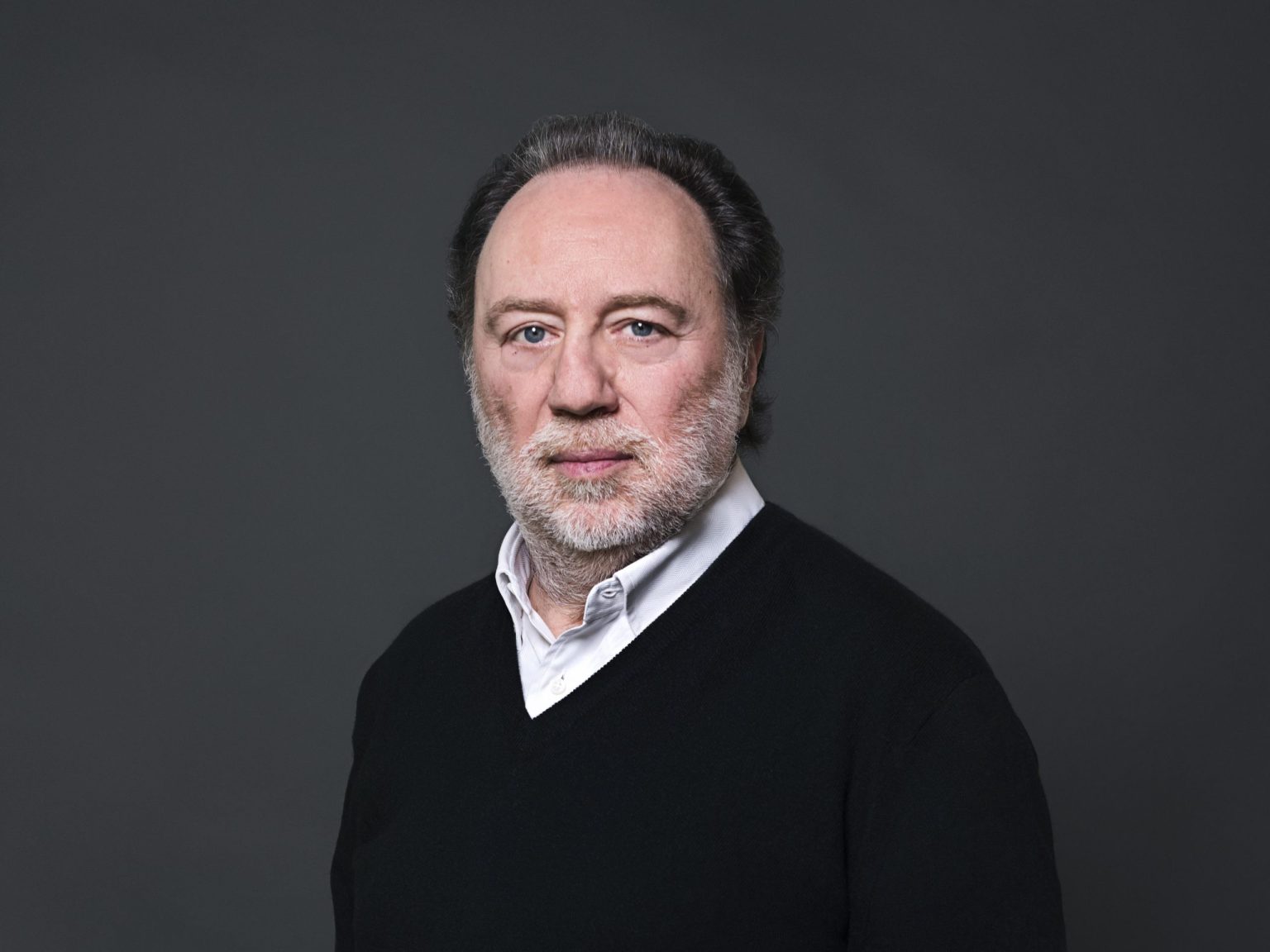
Italian conductor Riccardo Chailly and the Filarmonica della Scala, of which he is music director, will open this year’s Dvořák Prague Festival. On 5 September 2026 at Prague’s Rudolfinum, they will perform two celebrated works by Dvořák: Cello Concerto, with Julia Hagen as soloist, and the New World Symphony. A day later, on 6 September 2026, they will perform Rachmaninoff’s The Rock and Piano Concerto No. 4, with Alexander Malofeev, before bringing the evening to a close with Tchaikovsky’s Symphony No. 4. Maestro Chailly very rarely gives interviews, so I was all the more delighted when he generously spoke not only about music and conducting, but also about mathematics and the adrenaline sports he once pursued.
You are returning to the Rudolfinum with works you have conducted for decades. Do you nevertheless revisit them before every concert?
I am immensely pleased to have the opportunity to return to Prague and perform once again for the local audience. The Filarmonica della Scala and I performed in the Czech Republic fairly recently, and I have a deep affection for both the country and its music. With Dvořák’s Cello Concerto and Symphony No. 9, there can be no question of merely ‘refreshing’ them. They are enormously complex works, and before each new performance I study them again, practically from beginning to end. I find that very enriching, because the cello concerto, for example, makes great demands on its performers, not only the cellist but, in this case, the conductor as well. I have been working with it since the 1970s. In the 1980s, I was fortunate enough to perform it with legendary soloists: first Paul Tortelier, then Lynn Harrell and Heinrich Schiff. Each of them opened up a new musical universe for me within this great work by Dvořák. I am now looking forward to performing it with Julia Hagen. It will be different again, and I believe it will offer me similarly new and enriching insights.
You have also conducted Dvořák’s other concertos…
Yes. I am one of the few conductors who have also performed his Piano Concerto. I conducted it in Berlin in the 1980s, and I consider it a musical jewel. I also perform his Violin Concerto fairly often. Taken together, the three concertos demonstrate the greatness of Dvořák’s imagination and creativity.
The festival’s second evening will be devoted to Rachmaninoff and to Alexander Malofeev, whose playing first impressed you when he was only fourteen…
Malofeev is a great talent and an extraordinary virtuoso. A few years ago in Lucerne, we performed Rachmaninoff’s Piano Concerto No. 1, a treasure that the younger generation overlooks all too often. We are now turning to the Piano Concerto No. 4. It is among Rachmaninoff’s most mature and stylistically advanced works, and its modernity may unsettle some listeners. At times, its musical language approaches Prokofiev and sometimes even Stravinsky. Last week, I performed it in Lucerne with Lukas Sternath. It is therefore fresh in my mind, and I look forward to returning to the concerto with Malofeev. The same work, yet different once again.
Rachmaninoff’s Piano Concerto No. 4 exists in several versions. Which one will we hear?
In Prague, we will perform the final version from 1941.
Why do you prefer it to the others?
The original 1926 version is so expansive that Rachmaninoff himself wondered whether it was too Wagnerian. He once even compared its length to Wagner’s Ring cycle. (laughs) Rachmaninoff later revised the work thoroughly, and I believe the final version is easier for listeners to grasp today: compact and direct.
You have devoted yourself to both opera and symphonic music since the beginning of your career. Was this dual path a conscious choice?
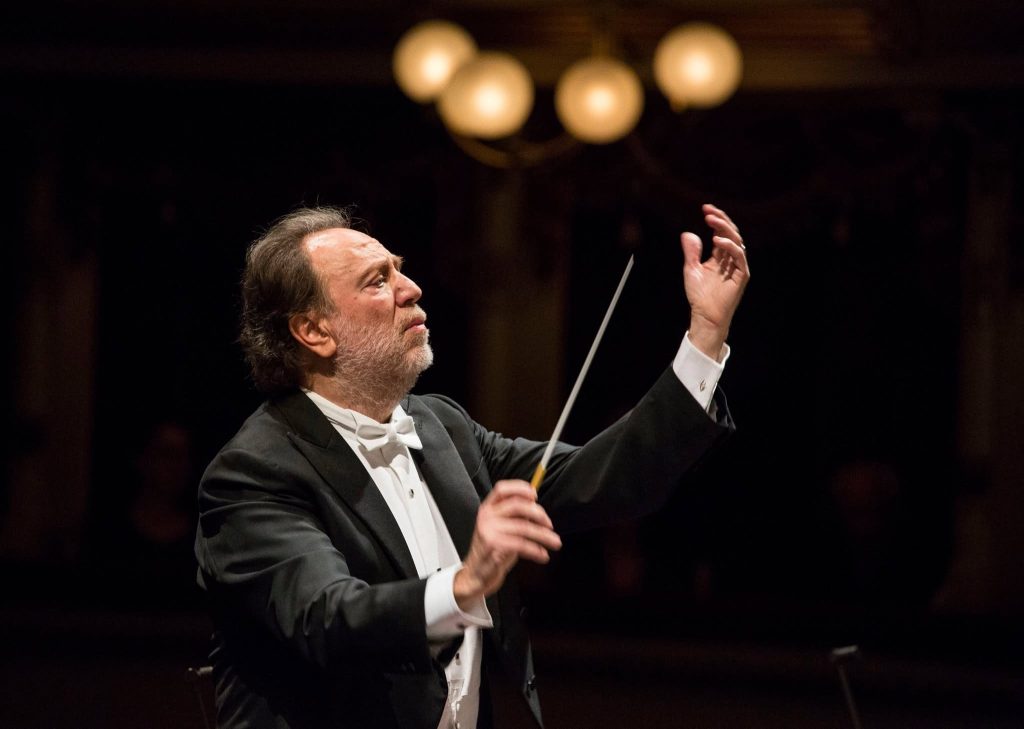
It all began in the early 1970s, when Claudio Abbado invited me to La Scala as his assistant for the symphonic repertoire. At the same time, I was able to listen to and observe every rehearsal during the opera season, whether Abbado or one of the guest conductors was on the podium. Throughout his life, Abbado combined opera with the concert stage. Even when I was young, I hoped that, like him, I would be able to devote myself to both. Fortunately, that hope was fulfilled. This duality remained the foundation of my work during twelve seasons at La Scala and of my relationship with the Filarmonica della Scala, which is now a symphonic ensemble with a very strong identity.
Could you imagine devoting yourself only to opera, or, conversely, exclusively to symphonic music?
Operatic experience is essential, because you must be adaptable when accompanying the human voice. I discussed this many times with Herbert von Karajan. He was convinced that a conductor could not be complete without also conducting opera. He himself continued to conduct both opera performances and concerts until the end of his life. Each experience enriches the other. A symphonic background helps you master the orchestral writing in the operatic scores of Verdi, Puccini or Wagner, as well as Dvořák’s Rusalka, which is a jewel just like the Cello Concerto or the New World Symphony. It allows you to reveal the greatness of opera’s symphonic dimension.
Conductors who work only in the symphonic repertoire, or only in opera, may not consider themselves incomplete…
That is their problem. (smiles) If you truly want to understand the conducting profession, you need both kinds of experience. Dvořák’s Cello Concerto, for example, must be conducted with the flexibility of an opera conductor. It is a concerto in the style of recitar cantando. It is also often described as a symphony with obbligato cello. I grew up with legendary recordings such as Talich’s with Rostropovich, made in Prague in 1952. They show that a conductor’s experience must serve the soloist’s freedom. Operatic practice gives you an enormous advantage in this respect.
Did you take part in any conducting competitions when you were young?
No, I never had to enter one. I was very fortunate. I began conducting at thirteen in Padua, when Claudio Scimone invited me to lead the chamber orchestra I Solisti Veneti. I studied at the Milan Conservatory and continued my studies alongside my early conducting work. The closest I came to a competition was at the Accademia Chigiana in Siena, where I studied with the legendary teacher Franco Ferrara. There were about forty of us. The field was narrowed to twelve, and only six were allowed to conduct the final concert with the orchestra. In the late 1960s, this gave me an opportunity to measure my talent against that of others.
Have you ever served on the jury of a conducting competition?
I was approached several times, but I never accepted because of the time commitment. I would find it even more appealing to lead masterclasses and pass on to young conductors the experience I have gained over my long career. I have given only one, at the Milan Conservatory, and we worked on Puccini’s Tosca. It was a very interesting and rewarding experience.
If a very young Riccardo Chailly came to your masterclass, which work would you study with him?
When I was very young, I began with the classical repertoire: Beethoven’s Egmont and Coriolan overtures and his Symphony No. 1. They are excellent starting points for studying a clear conducting technique that has no need for a flood of words. Everything you want must be achieved through gestures of the hands. That is the essence of the technique known as Schlagtechnik.
So would you advise your younger self to talk less in rehearsals?
I remember how Franco Ferrara, whom I studied with over three summer courses, would always shout at us: ‘Don’t talk. Express everything with your arms, your eyes and your body language. No talking. Conduct!’ That school shaped me. Speaking is necessary, but you must keep a very careful eye on how much time you spend doing it. Pierre Boulez, whom I was close to during the final years of his life, used to say that in a sixty-minute rehearsal, a conductor who knows the craft should speak for no more than fifteen minutes. The musicians should play for the remaining forty-five. After all, they came to play, not to listen to speeches. Learning this balance is an important part of the conducting profession.
I assume that when you have worked with an orchestra for many years, you can speak even less…
Yes. I have worked with the orchestras in Lucerne and at La Scala for more than ten years. There is almost no need to speak there; the musicians already know my gestures well. But I also apply Ferrara’s principle during my relatively infrequent guest appearances. More important than speaking is the long process through which you learn to express your interpretive intentions with your own technique.
Is the baton indispensable to you?
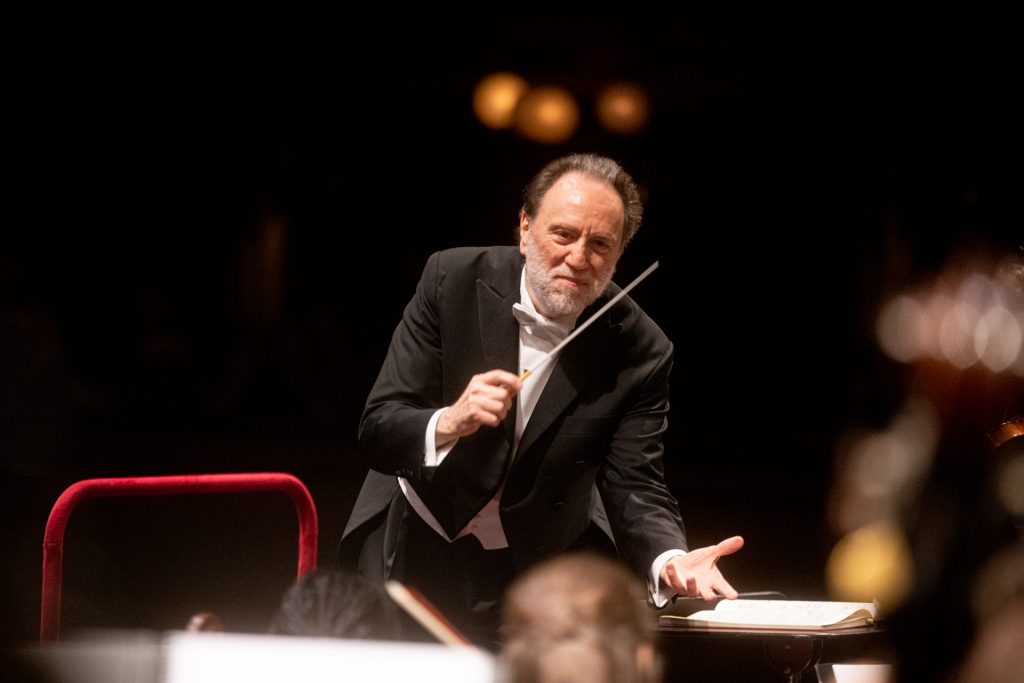
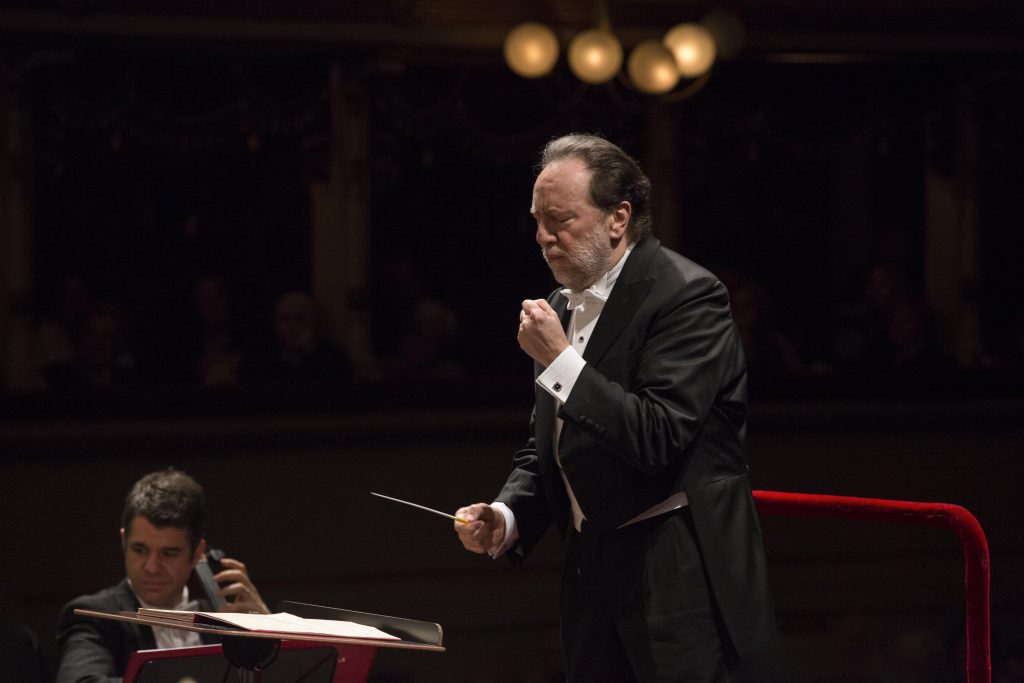
It is to me. Conducting technique rests on the work of the right hand and on absolute control of the baton. The baton amplifies even the slightest movement of the hand. If the right hand makes a mistake, the baton magnifies the faulty movement and makes it visible to everyone. It exposes how secure your technique is. I therefore cannot imagine conducting without a baton.
Do you now feel completely secure in your technique?
I have been fanatical about precision since my youth, so I am never one hundred per cent satisfied with my performance. There are always places that could be improved. Technique is a very important and reliable guide for me, especially the clear direction of the right hand with the baton. More serious errors, however, usually stem from an interpretive conception that has not matured enough. That is where my greatest doubts lie, far more than in the technique itself.
Psychology is indispensable to a conductor as well. Footage of a rehearsal in which Maria João Pires realises that she has prepared the wrong Mozart concerto, while you calmly allow the orchestra to continue, has become famous. How did you manage to remain calm in such a situation?
Over many years, Maria João and I performed various concertos together, including that very Mozart Piano Concerto in D minor, so I trusted her abilities and knew she could switch to it immediately. And she did: she played flawlessly. It was, however, an extreme situation. Her flight had been delayed, and she arrived only in time for the public dress rehearsal. That was one reason I did not stop the orchestra. There was an audience in the hall. Such an incident is very rare, though. Under normal circumstances, I value the time in which soloist and conductor can develop their ideas together.
Alongside the classical repertoire, contemporary music remains an important part of your work. Why is it indispensable to you?
The purpose of the conducting profession is not simply to repeat the great works of the past. Connecting this repertoire with contemporary music is a challenge. I am currently preparing a project that is personally very dear to me. The sudden death of my close friend Wolfgang Rihm led me to plan a full-evening programme of his works for the Musica Viva series in Munich with the Bavarian Radio Symphony Orchestra at the end of January 2027. I am very proud of this project because we were close, and I consider Wolfgang one of the greatest composers of the past half-century. A conductor must never become fossilised in the classical repertoire alone, but must remain alive and ready for something entirely new.
Contemporary music is often closely associated with mathematics. Were you interested in mathematics or the natural sciences when you were young?
Mathematics is undoubtedly part of musical structure, but I was no great mathematician at school. I am, however, fascinated by rhythm, and rhythm is a consequence of mathematics. Once a particular structure has been notated, everything must correspond precisely to the notation. Achieving that kind of vertical precision with an orchestra can be difficult, but when it succeeds, it becomes a source of almost infectious shared joy. When a hundred musicians play a complex rhythmic passage together, you can see a sense of collective pride in their faces.
Yet amid all that verticality, the horizontal lines must not be forgotten…
At this very moment, I am studying The Rock again. It is a short symphonic poem that Rachmaninoff composed at the age of twenty, evoking an encounter between an older man and a young woman. Through its allusion to a short story by Chekhov, it suggests many moods and the two characters’ feelings for one another. You do not need mathematics there. To capture a symphonic poem such as The Rock, you need imagination and sensitivity.
When you were young, you were interested in many different musical genres. What is your relationship with them today?
In my view, there is only one distinction: good music and bad music. Genre or style does not matter; quality is what counts. I have never felt there was a barrier between jazz, classical music, rock or pop. Every genre is interesting if the quality is there. When I was younger, I often went to concerts in all kinds of styles. I rarely do so now. With age, one uses time differently, and the way one lives also changes.
After a lifetime spent with music, is it easier or more difficult for a work to move you emotionally?
Being genuinely moved by music cannot be taken for granted. When it truly touches you, it happens suddenly and unexpectedly. Sometimes you carry such emotions within you forever, precisely because they cannot be predicted. They can arise in any genre, not only in classical music. They are born of the quality, intuition and originality of the composition.
Is there nevertheless one work that unfailingly awakens emotion in you?
I could probably name two hundred. But if I had to choose only one, it would be Bach’s St Matthew Passion, which always elicits a profound emotional and spiritual response in me. I have conducted this work for more than twenty years, and each time it reawakens powerful emotions connected with this extraordinary human tragedy.
You enjoyed adrenaline sports when you were young. Do you now find anything similarly exciting in your free time?
Adrenaline sports, motocross and parasailing were part of my youth. I am much more cautious now. But I still very much enjoy driving.
Should I take that to mean that you enjoy driving fast?
No, not at all. I drive calmly, certainly not at high speed! (laughs)
Your tenure as music director of La Scala is drawing to a close, opening up new possibilities. What are your plans?
Although my tenure is ending, I will continue at La Scala as a guest conductor; we have projects planned through 2030. I will also continue to appear elsewhere, primarily with orchestras I have known for many years. It is a privileged position. I can draw on long relationships with institutions such as the Royal Concertgebouw Orchestra, where I spent sixteen years and now hold an honorary title. I am happy to return there every year. Such relationships develop slowly, over many years. Nothing can be rushed.
How has the Filarmonica della Scala’s sonic identity developed during your years with the orchestra?
The orchestra’s symphonic activity was the foundation of its artistic growth. The players became increasingly confident in the repertoire, and the ensemble developed into an outstanding symphony orchestra. The Filarmonica was founded in 1982 on Claudio Abbado’s initiative; he wanted to distinguish its symphonic activity from the work of the opera orchestra. Guest conductors of great stature also helped bring this vision to life. As the repertoire expanded over the years, the quality grew as well. Today, it is an orchestra you can recognise after just a few bars by its own distinctive sound.
Do you ever dream about music?
If music comes to me in my sleep, it is only a nightmare of melodies crossing one another, something unpleasant and completely different from the reality of daily work. For me, the dream begins when I open a score. As we speak, I am sitting in front of the score of Rachmaninoff’s The Rock, because I am about to rehearse it in Milan and the orchestra has never played the work before. From the very first rehearsal, I therefore have to approach both the piece and the musicians with a completely fresh mind.
I would love to see what your score looks like…
I am old school: my scores are full of notes in many different colours and, above all, lines marking out groups of phrases. I organise these markings almost like mathematical units, because they help my memory order the music in my mind until it crystallises.
Once the music has crystallised in this way, do you conduct from memory?
No. During concerts, I almost always use the score as a silent guide. Sometimes the written page shows you something you had not noticed before; at other times, conducting from memory gives you more freedom because you are not confined by the score. It depends on the situation. Fortunately, music is so varied that you can change your approach.
You rarely give interviews nowadays. Why did you agree to this particular interview before your trip to Prague?
Because I very much enjoy coming to Prague. I admire the Czech musical tradition and the Czech Philharmonic, and I consider the Rudolfinum one of the world’s legendary concert halls. When I was young, I studied the symphonic repertoire through Rafael Kubelík’s legendary recordings. I also once attended a Czech Philharmonic rehearsal conducted by Sir Charles Mackerras. All these past experiences shaped me, and that is why it felt right to give this interview. Performing at the Rudolfinum is a joy. Both the hall’s acoustics and the warmth you feel from the Prague audience are quite extraordinary.
Is there anything else about the Czech Philharmonic’s work that you particularly value?
I admire what the Czech Philharmonic has done to deepen our understanding of Alexander Zemlinsky’s work. As both conductor and composer, he was an important figure in Czech cultural life and profoundly shaped the country’s musical scene. He was also a regular guest conductor with the Czech Philharmonic. It is valuable that the orchestra later commemorated this historic connection through recordings of his symphonic works that remain important to this day.
Allow me one final question: do you ever regret that, as the conductor, you cannot enjoy your own concert from the auditorium?
No. I am very happy when I can conduct and then forget about the concert. I take a pragmatic view of my own musical work.
Thank you for granting me this rare interview.